





Home Blog Page 82

How To Create The Perfect CBO Campaign On Facebook – Facebook CBO Campaign From A to Z – Part 3

0
Facebook CBO Campaign Complete Creation Guide From A to Z Part 4
How To Create The Perfect CBO Campaign On Facebook - Facebook CBO Campaign From A to Z - Part 4

Welcome to the third part of how to create the perfect CBO campaign on Facebook blog series!

In the first part, I showed you how to setup your first CBO campaign and what options you need to choose(without going too much into details). The second part was about Facebook’s campaign objectives, pixel and targeting(in detail).

In the third part, I’m going to talk about our ads: Different type of ads, ad examples, how many ads we need to test and much more. By the end of this article, you’ll know exactly what ads you need to use and how to use them to get the best results.

If you missed the first two parts, you can read part 1 here and part 2 here.
find winning products to dropship


1. Facebook Ad Formats

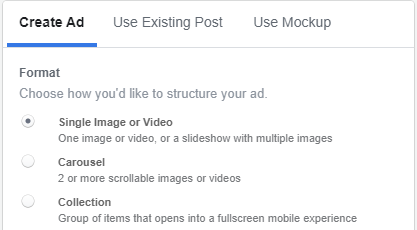
After creating our CBO campaign and finishing setting up everything we need on the adset level, the final stage before we can run our campaign is creating an ad. We can either create an ad on the ads manager or use an existing post from one of our pages. I never used the Mockup feature and never saw someone use it so I can’t really give any info on that option… Most advertisers I know stick to the first 2 options – Create Ad or Use Existing Post.

There isn’t much difference between these two – Some people prefer posting first on their page then just choose that post as an ad and some prefer creating an ad on the ads manager instead of posting it on their page. In both cases, it won’t hurt the results. But there’s still some “cosmetic” differences you should know about.

An ad created straight from the ads manager has a bit more editing options we can use:
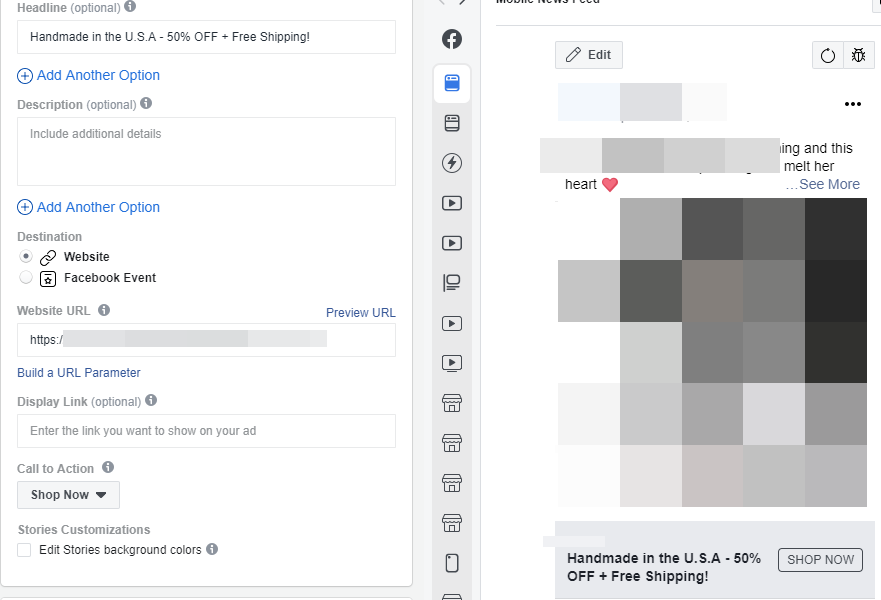
Let’s look at this photo ad I create for a Valentine’s Day product – I created it straight from the ads manager and uploaded the 1200×1200 photo ad I had.
Next thing was to type my ad text, headline text(next to the button), changing the button to “shop now” and using the correct product url(don’t want to accidentally use the wrong product url). The final result is a clickable 1200×1200 photo ad with a headline text + shop now button.

It looks great, has the regular ad text on top of the photo for people to read and understand more about the product. And in the bottom, I displayed the Forte of my product by letting people know it’s Made and shipped from the USA. With a fake 50% Off discount to seal the deal πŸ˜‰

But what if I used an existing photo post as an ad? Here’s the difference in the editing options:
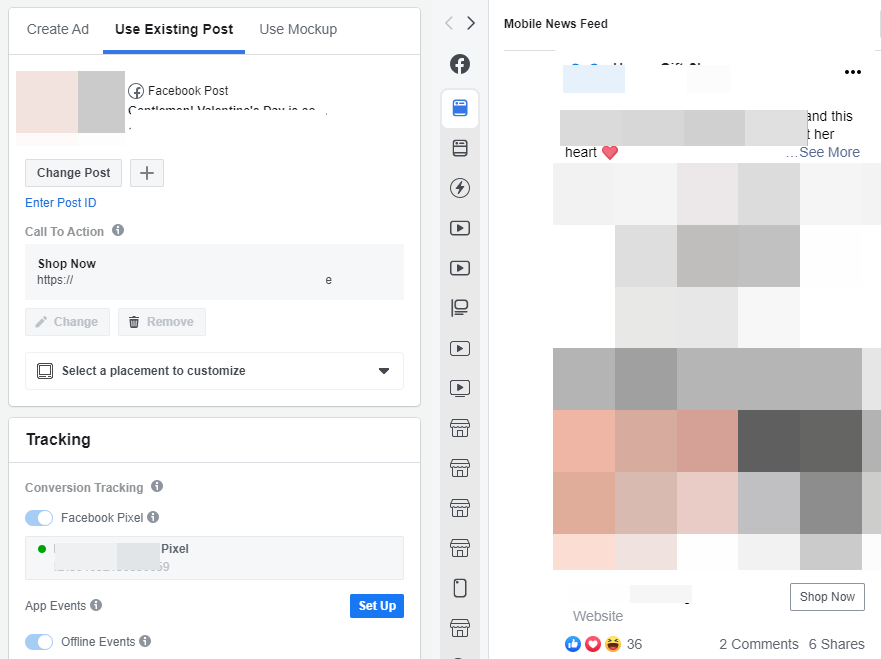
This is a 1200×1500 photo ad I had to first post and then use as an ad. Why? Because for some reason, creating a 1200×1500 photo ad straight from the ads manager crops it automatically. So you can’t basically have a clickable 1200×1500 photo ad without it being cropped. So I had it first posted on my page and then I used it as an ad.

In this case, I could not add a headline text but only a button. What people saw below the photo ad is my page name and the type of the page(website, community, etc) and the “shop now” button. The photo itself wasn’t clickable.

Same thing goes with video ads:

If I use an existing video as an ad, I won’t have an option to put my own headline text – Facebook will use my video title by default. So if you just uploaded a video to your page, make sure to give it a good title and not just name it as your product. If I sell an adorable cat house, I want my video ad title to be “Adorable cat house – Order Yours Now” and not “Cat house”.

If the video was uploaded from the ads manager when creating an ad, you can edit the headline to whatever you want. I just had to make these points clear and show you the differences between the two options.

Ok Back to ad formats!

Starting with video and photo ads: You probably already understand that not everything has to be square and we have plenty of display options supported by Facebook. To see the supported ratios, check the official Facebook ads guide here.

I personally use 1200×1200 square ads for both my videos and photos. It takes a bug chunk of the feed space so if you have an eye catching photo/video, people will definitely stop scrolling. For photo ads, I also use 1200×1500 size. It takes up even more space in the feeds and you can display products in a much cooler way.

For example:
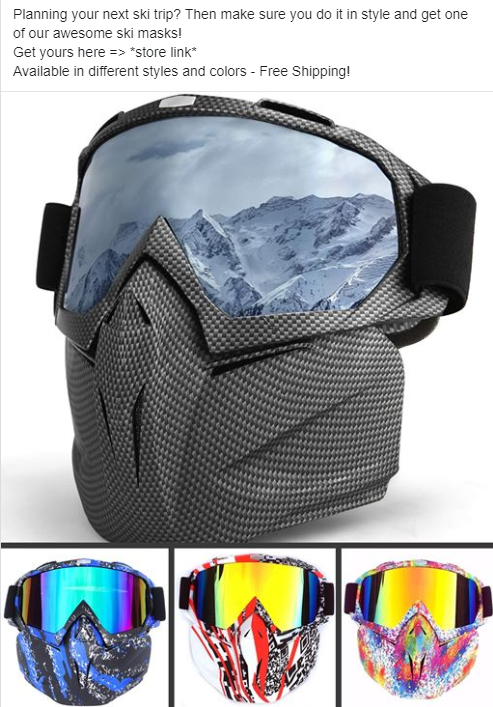
This is an example photo ad I used in my winning product articles – Make sure to check them out.

And before I jump to a different ad format, let’s take a look at how our ad copy should look like. First of all, you need to understand that Facebook limits the number of lines we can have in our ad text before the “See More” button appears.

Once in mobile, it was 7 lines but today it’s already 3 lines max. This means we have to make sure the first lines of our ad copy have a catchy text and our link is visible before the “See More” button. I know we have a Shop Now button, but it’s still better to also have a visible link to our product in the ad copy.

So what makes our ad text “catchy”?

  1. Emojis – Don’t exaggerate! Emojis help to make our ad copy more interesting but we don’t want it too look spammy. One or two emojis are enough.
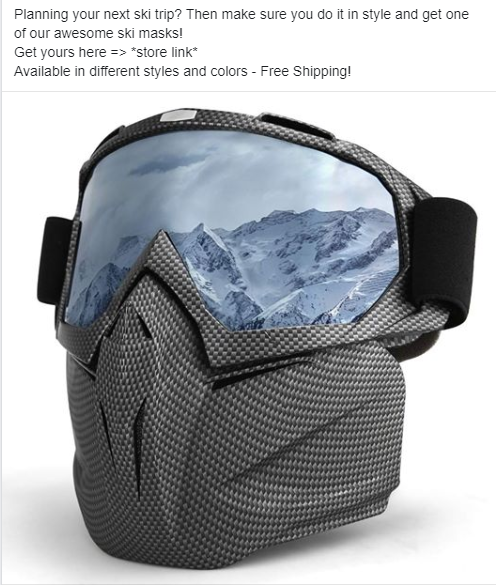
  2. Speaking to our audience – Take this ski mask for example. The ad text speaks right to the point and addressing to people who plan their ski trip. If we were to just write “Awesome ski mask”, people probably could miss it.
  3. Addressing the problem or talking about the solution – This works best for problem solving products where we address the problem or talk about the solution in the first lines. This way we increase the chances of people who actually have this problem to stop from scrolling and look on our ad.
  4. Amazing Offer – If you have an amazing offer for a certain product you think can really do the difference, then make sure to let people know about it in the first lines. And no, I’m not talking about “Free Shipping”. More like Get X and enter a contest to win Y OR Free! Only play for shipping. (Yes, Free+Shipping still works).

Be creative – That’s it!

Carousel Ads:
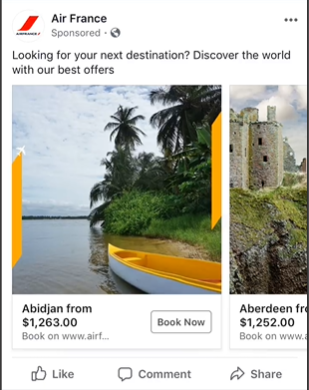
Honestly speaking, I recommend using carousel ads but in the last couple of months I didn’t use them at all… My experience with carousel ads is when I used them for retargeting and the results were great!

Customers could see different styles of my product, different products I sell on my store, and I was getting pretty cheap conversions. But like I said, I used carousel ads only for retargeting. Nowadays I just create different videos or photos and use them for retargeting.

The best part of carousel ads is that they don’t die quickly – From my experience, I always had steady results with carousel ads and I could run them for months without stopping. Sounds like a fairy tail but the same thing happened to other sellers I know.

This Valentine’s Day I did a BIG mistake and left a lot of money of the table because I didn’t even use carousel ads once. I suggest you don’t do the same mistake and give carousel ads a try! Read more about carousel ads here.

Collection ads – 0 experience with this so I can’t really say anything here.

How Many Ads Per Adset Should We Launch?
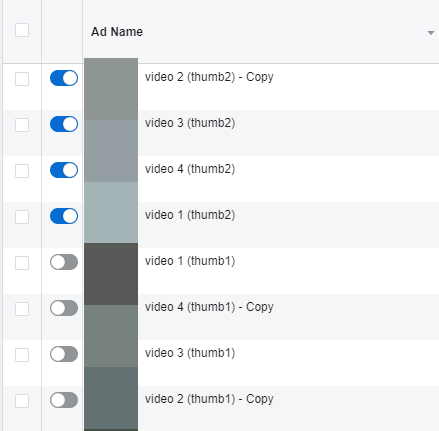
You can have multiple adsets in one campaign and multiple ads in one adset. The amount of ads in one adset really depends on you but if you want to know my “magic” number, then the answer is at least 2 ads per adset.

We have no idea how the audience is going to react and what ad they’re going to like more – This is why we must test more than one creative and Facebook will deliver both to our audience and see which one is best.

In the screenshot above, we had a video ad with 4 different beginnings. If you didn’t know, the first 3 seconds of a video are really important and they should be catchy enough to stop the user from scrolling. It’s called a scroll stopper – google it to read more.

So to test the 4 different beginning our video had, we made 4 ads in a single adset. On top of the different beginnings, we had 2 thumbnails we also wanted to test. So that means we now need 8 ads. 4 beginnings will use thumbnail1 and the same 4 beginnings will use thumbnail2.

So we ended up testing 8 ads in a single adset.

The video with Thumbnail1 had the worst results so we ended up killing all the ads with Thumbnail1 and later on, only one beginning was getting good results so we ended up with 1 ad only.

Let’s take a look at this example:
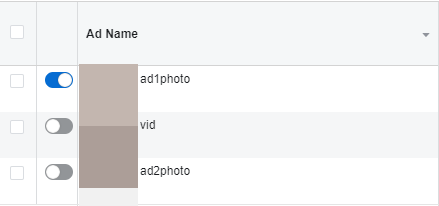
This is one of the Valentine’s Day products I was testing and here I had only 3 ads in 1 adset. one 1200×1200 video ad and 2 photo ads(1200×1200 & 1200×1500). In the end, the 1200×1500 photo ad was the best and I shut down the rest.

I think testing 2-4 ads in one adset is more than enough – If you have a single video ad, test different thumbnails or different scroll stoppers. If you have only a photo ad, test 1200×1200 & 1200×1500 sizes or different backgrounds. Give Facebook the option to choose the best performing ad for you and kill all the rest.

Instead of duplicating an existing ad “X” times and changing the thumbnail or uploading a new photo, some people prefer using Dynamic Creatives:

This is found in the adset level and from what I understand, you will end up having one ad but there will be multiple built-in creatives Facebook will test. Don’t take my word on it because I have absolutely ZERO experience with dynamic creatives and prefer using the old method of duplicating ads.

No reason for dynamic creatives not to work so feel free to test it out – You can read more about Facebook Dynamic Creatives here.


The Endgame Of Testing Multiple Ads
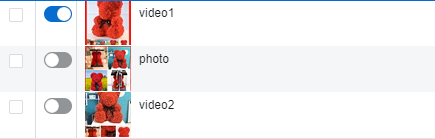
Give your creatives at least 2 days and then shut down those with bad results and keep only the best one running. In a fantasy world, only one of your creatives will get the sales and all the rest stand on nothing. So shutting all the rest will be a no-brainer.

But we’re not in a Fantasy world and we may find ourselves in a situation where some ads still get sales. In this case, I judge based on how close it is to the best ad. If my best ad has 10 sales and the other one has 8 sales, then of course there’s no reason to shut it.

If my best ad has 10 sales while the other has 1 or 2 sales, then I can shut the other one with confidence. There’s no math here just simple logic that’s based on how close the results to the best performing ad.

And of course there’s the ROIs we need to check and see if it’s still worth feeding the less performing ad more budget. If my best ad has 10 sales at a cost of $8 per conversion and the other one has 8 sales at a cost of $20 per conversion, then I’m not going to keep that ad running anymore.

After this our only hope is for the campaign to keep performing so we can think about scaling πŸ™‚


*Bonus* URL Parameters

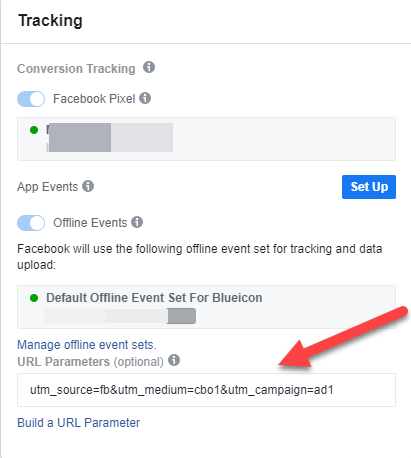
In the ad level, there’s something not many use which is the URL parameters. With URL parameters, we can track from where our conversions come and not rely only on Facebook reports. As you know, Facebook sometimes misses some sales so there can be a case where an adset or an ad actually brought a sale but Facebook didn’t show anything.

Imagine you’re in the early testing stages of a good product and there are 2 unregistered sales you have no idea where they came from – You look at your ads manager and see that there’s an adset that’s losing money so you shut it down.

But it actually didn’t lose any money! The 2 unregistered sales came from this adset and if you kept it running for more time, it would’ve been your best performing adset. So if you used URL parameters, you could easily check on Google analytics or even on Shopify dashboard to see where the sale has come from.

Here’s an example from Shopify’s dashboard.
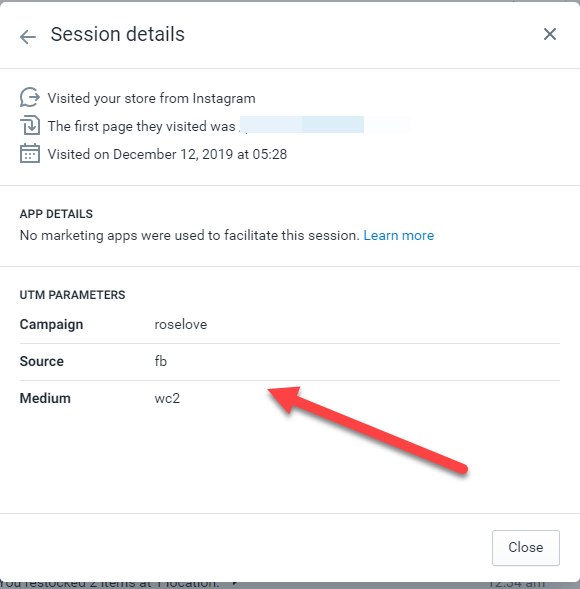
As you can see in the screenshot above, Shopify shows me a simple report on the UTMs used for this sale. I can easily see that wc2 adset was the one that brought me the sale. It’s better to use Google analytics and check there all your parameters and stuff. But you can always check it on Shopify if you feel Google Analytics is too much for you.

Use google Campaign URL Builder to build your tracking URLs or do it on Facebook.

Disclaimer: I’m not a pro URL builder and maybe the way I build the tracking URLs is wrong. I suggest you check official sources and learn the right way to build your tracking URL. I don’t want to accidentally mess your GA reports…


To Sum It Up:

This week’s third part was all about the ads and their creatives. You now know what type of ads to create, the dimensions and how many ads you should test. What to do after the testing stage how basically Facebook’s ad level works.

Next week’s article will be about results and we will talk a bit about scaling.

Thank you for reading and I hope you liked the third part of the series πŸ™‚


Struggling to find good products to sell? Not sure who’s your target audience? Tired of losing money on products you were sure were “winners”?

Then Ecomhunt is what you need! Find hot winning products that are added daily, spy on their ads & stores and import them into your store in 1 click and Start Selling Today!
Must Read Articles:

Thinking About Opening A Print On Demand Store? Here Are 5 Important Tips To Get You Started

3
Start Your Print On Demand Journey With These 5 Tips
Thinking About Opening A Print On Demand Store? Here Are 5 Important Tips To Get You Started

Always wanted to create your own Print on Demand Shopify store? Looking to add some cool, unique products to your dropshipping brand store? Are you a talented designer and looking to sell your art? Then this article and exactly what you’re looking for!

In this week’s article, I’ll share 5 tips to get you started on your Print on Demand journey and share my personal, 4 year experience selling POD products.


find winning products to dropship


1. Don’t Do Trademark

So you watched the last season of Rick & Morty and thought to yourself “WOW! This catchphrase on a shirt or a mug can sell like crazy! I’ll just put Morty’s silhouette on a shirt and slap the quote below and we have a winner”. And that my friends, is how you break the law!

This is a big NO-NO in the industry – The best case scenario, you are taken down after a DMCA letter and get shut down by Facebook. The worst case scenario is a lawsuit…

It doesn’t matter if you’re dropshipping or doing POD, you mustn’t break the law and sell products you have no right to sell. If you want to sell an Avengers backpack, pay for licensing or sell it from an official distributor(And no, Aliexpress sellers are no official distributors). Did you find a cool mug design in the cat niche? Don’t be an a**hole and just copy it. Make your own original design!

You need to make your own designs in legit niches with no risk – Cats, Fishing, Family, etc. PLENTY of niches to choose from.

Here are some Myths I found on various POD groups:

  1. If I draw it myself, It’s fine to sell – No it isn’t! You are not allowed to sell what isn’t yours. Here’s an interesting fact I heard once from a lawyer: if you take a piece of paper and draw Superman on it, you are committing copyright infringement. You are copying someone’s work, even if it’s for your own use. Just so you know πŸ˜‰
  2. Lots of people sell Wonder Woman shirts, I think it’s ok if I do it too – No it isn’t! It doesn’t matter how many people sell this shirt, you can’t do it without the proper license. The people selling it will be eventually caught and shut down.
  3. If Aliexpress and Ebay are selling Avengers keychains, it’s probably legit and I’ll dropship from them – No it isn’t legit! Plenty of sellers on Amazon, Ebay, Aliexpress who sell fake, non licensed merch. You can’t simply dropship from them even if they tell you it’s legit. You can do it only from legit suppliers.
  4. I can dropship it if I buy it from a legit source – No you can’t! Even if you buy from Marvel’s official website, you still can’t dropship the products without the proper license. It’s the same as if I sell jeans I buy from a local brand to Europe. I need to be an official reseller in order to do that.


2. Quality, Support And Customer Satisfaction Come First

It’s important you choose the right POD company to work with and not just based on their base prices. Yes, you will profit much more with a company that prints shirts for $6 and not $10. But if the quality and support are bad, it will hurt you in the long run and you’ll have to deal with a lot of pissed customers.

Here are a few ways you can test if a POD company is right for your business:

  1. Order samples and check yourself the quality – If you want to be 100% sure about the quality, just order it and see for yourself. It’s not expensive and you can also check how good their shipping.
  2. Talk to their support – It’s important to have a fast support team to help you with any issue you may encounter. Test them out and see how long it takes them to answer and how they answer too. Some support teams just “brush” you off and this is not a company we want to work with.
  3. Check their costs – Yep, in the end we have to consider the costs. Great support and superb quality t-shirts are great but if the base cost is too high, you’re not going to make any profit.
  4. Check for any “hidden” costs – Some companies hide these and you can suddenly find yourself paying weird taxes or some other weird fees. Make sure you know exactly what you’re paying for.
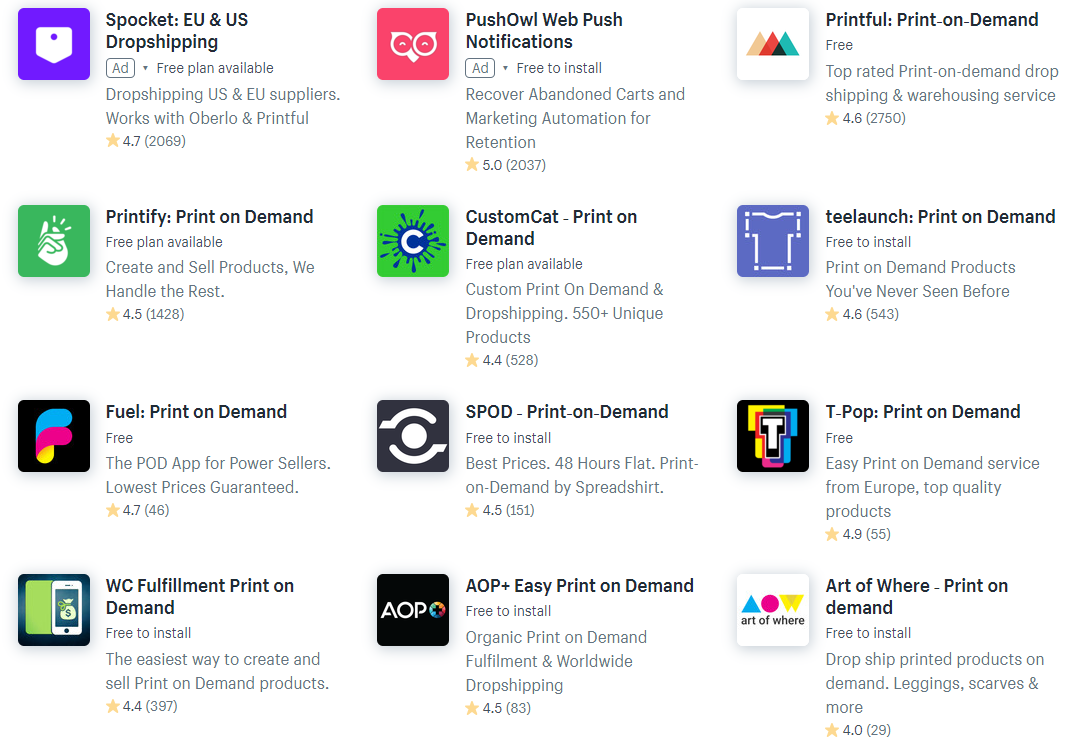
  5. Variety – Stay on top of your competition by offering fresh new products. A respectful POD company needs to have plenty of products you can sell and add new products when needed. If a POD company is stuck only on pillows, mugs and shirts, you will need to move on.

My personal recommendation for a POD company is All Over Print(AOP+). It’s run by amazing guys located in UK who know how do get the job done. Their support is amazing and the quality of their products is just superb.

On top of that, AOP+ make sure to always update their products and bring new, exciting POD products you can sell.


3. It’s Ok To Dream But You’re Not H&M

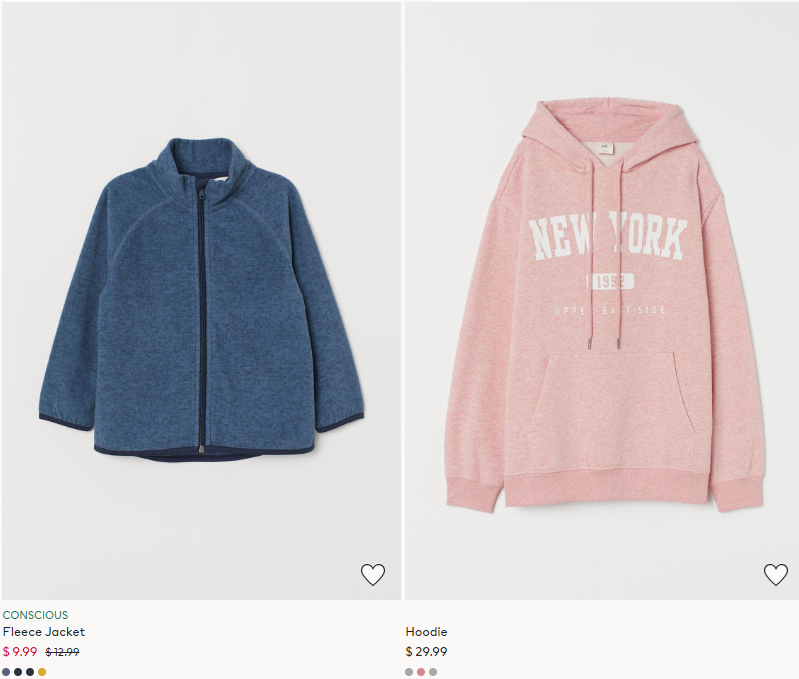
I know having your own POD store can be exciting but this doesn’t mean you can just slap “New York” on a t-shirt and get sales. You’re not a world renowned fashion designer and you’re not the owner of 5,000 fashion stores Worldwide.

Unless you have some secret to drive insane traffic for free so they buy your New York hoodie, you will have to pay from day one to bring traffic to your store. So now that we agree getting traffic usually isn’t free, in order to succeed you have to be unique.

This means picking a niche or couple of niches you’re going to work on – Let’s say cats and fitness. After picking your niche, you need to bring cool designs that speak to your audience. Unique and trendy designs.

If getting ideas is hard, you can always bring a new POD product if available and check other successful designs. Then just make something similar(DON’T COPY pixel by pixel) and try selling it.

This tip isn’t meant to discourage you… It’s just that I see plenty of store owners who jump into the POD game thinking they’re an actual brand. Dreams are a good thing but let’s focus first on getting some sales before building our “brand”.

The people who actually succeeded at building a brand started from something small and usually focused on a specific niche. They brought something unique(product or designs) and after getting sales and enough customers, they had the means and most importantly the EXPERIENCE to build an actual brand.


4. Not Everything Has To Be On Shopify

POD platforms like Gearbubble and others allow you to upload and sell your own designs without having an actual store. After signing up, you only need to choose your product and upload your design. Next is to advertise the product you create to the right audience and start getting sales πŸ˜‰

The fulfillment and customer support is done for you – They print and ship the product to your customers for you and if there’s an issue, their support team handles it. Your only job is to sell and profit.

You don’t have to worry about payment providers – The purchase goes through Gearbubble’s PayPal and credit card processors. Your only need to request a payout and it will be sent to your PayPal or Payoneer account(bank transfers and other payout methods are available as well).

And you don’t have to worry about product selection because there’s a lot of products to choose from(some even have customization option like custom text and photo uploads). And the shipping is done from USA with tracking so your customers will receive their products in a timely manner.

I personally use Gearbubble for years now so if you’re looking for a POD company with a great conversion rate, quality products & support, Gearbubble is what I recommend.


5. List Your POD Products On The Biggest Marketplaces

This isn’t the same as showing your ad on Facebook to people that just scroll their feed to pass the time. Etsy, Amazon and Ebay are getting millions of visitors per day from people who actually look to buy something.

If you have a great product that ranks up, you can get a crazy amount of sales. I’ve seen funny mugs with simple designs get thousands of orders on Amazon and that’s without running a single ad. Yes you have to pay pretty high commissions… And on some platforms, you also pay per listing but that’s basically it.

Even if you earn $4 after product costs and commissions, I still call it a win!

If you’re looking for a quick way to list your products on these platforms, make sure to check out Gearbubble dropship program. A quick and easy way to list products and auto fulfill them after you get an order.

You can also dropship regular products on these platforms!

I guess most of you drive traffic to your dropshipping stores by using Facebook or Google ads but have you considered listing your winners on Amazon or Ebay? This isn’t rocket science and with the right product and the right price, you can get easy sales.

At Ecomhunt, we have a good amount of dropshippers who sell on Ebay or Amazon successfully by just listing the winning products found on our platform. You have the photos, description and everything else to create a good looking listing. After creating one, all you need to do is wait for an order to come in and fulfill it.

Of course, there are some rules you must follow and some of these marketplaces(like Amazon) can be a bit tough. They sometimes require lots of papers, id copies but once you’re done, listing and selling products won’t be a problem. Consider testing it out – Choose a marketplace you like and list some products πŸ˜‰


To Sum It Up:

You don’t have to be a graphic designer or a marketing expert to sell POD products – All you need is the right niche and a design that speaks to your audience. If you’re not a designer, hire one(just don’t overpay for the designs you get). If you can’t pay for ads, list your POD products on a big marketplace instead. If you’re tired of Shopify and doing support, sell your products on a POD platform instead.

POD isn’t rocket science and I’ve been doing it successfully for years now so there’s no reason you can’t do it as well. And if you’re already selling dropshipping products, then consider adding POD products as well to offer more products to your customers.

Dropshipping products + POD upsell products work like a charm!

Let me know in the comments if you have any questions. Good luck!


Struggling to find good products to sell? Not sure who’s your target audience? Tired of losing money on products you were sure were “winners”?

Then Ecomhunt is what you need! Find hot winning products that are added daily, spy on their ads & stores and import them into your store in 1 click and Start Selling Today!
Must Read Articles:

How To Create The Perfect CBO Campaign On Facebook – Facebook CBO Campaign From A to Z – Part 2

4
Facebook CBO Campaign Complete Creation Guide From A to Z Part 4
How To Create The Perfect CBO Campaign On Facebook - Facebook CBO Campaign From A to Z - Part 4

Welcome to the second part of how to create the perfect CBO campaign on Facebook blog series!

In the first part, I showed you how to setup your first CBO campaign and what options you need to choose. I didn’t go too much into details because it was just to show you how to do it in the right way. But today’s second part is going to be about all the details πŸ˜‰

In this part, I’m going to talk about Campaign Types, Pixels and Targeting – I want you to really understand the logic behind the stuff we do when we create the perfect CBO campaign and not just COPY-PASTE it with no clue about what’s going on.

If you missed the first part, you can read it here.

find winning products to dropship


1. Campaign Types / Campaign Objectives

When creating a new campaign and choosing “guided creation”, this is the screen you’ll see. The next step will be to choose the right campaign objective that will bring us closer to our goal.

If there’s a new pizza place in town and it wants to get some attention from the locals, then brand awareness or reach campaign could work really well. If someone has a blog and wants to get people to read his articles, then a Traffic campaign is the right choice to bring readers.

Over the years, Facebook has perfected their system to exactly deliver what we ask for – If 3-4 years ago I was running Engagement campaigns to get sales(and I was getting them!), if I do it now I’ll mostly get likes/comments/shares and that’s it. I’m no saying you can’t get sales by running Engagement campaigns, but the chances are really low.

Facebook has categorized the users into buyers, watchers, commenters, etc. If I choose Video Views objective, Facebook will know to grab only the users who are most likely to watch my video. Again maybe some of them will buy, but it won’t be even close to the order I could get if I asked Facebook to bring me the buyers(Conversion campaign).

Let’s go back to the Pizza place example: Instead of Brand awareness, the owner could go with an Engagement campaign and target his local area. He will probably get likes, comments, shares, etc and feel like he’s doing a great job but in the end, what he needs is people to visit his pizza place. Instead if he used brand awareness, maybe Facebook would likely target people who go often on weekends to let them know about this new delicious pizza place.

Same goes with the blog owner – He can get link clicks on his ad using Engagement campaign but it won’t be the same if he used the Traffic Campaign.

So you now probably understand that in order to get sales, we need to choose the Conversion campaign and nothing else. This will give us the highest chance of getting sales on our test campaigns and with limited budget, it will be a shame to waste our money on Objectives which won’t work.

With Conversion campaign, Facebook will pick the people who are more likely to buy our product based on the data they collect on us. It can be how often they buy online, their credit score, impulsive buyers or not, etc.

Facebook is a data machine and I suggest you let them do their job and don’t try reinventing the wheel.


2. Facebook Pixel

Facebook can’t collect data on our site from thin air and they need their own little agent to report back and share all the juicy details. This agent, called the pixel, is a short code snippet that appears on all our store pages so it can collect the data Facebook needs.

If someone with a Facebook account visits our site, they can identify him and record all his actions to later classify this user and place him in a certain consumer category. And he doesn’t have to visit Facebook first and then our store, he only needs to be a Facebook user and the pixel will recognize him. So if you drive traffic only from google, installing a Facebook pixel on your store will be a wise choice to later collect and build audiences on Facebook.

So by having a properly installed Facebook pixel on our store, we give Facebook the ability to collect data on our visitors.

What can we do with the data collected by Facebook?

  • We can create custom audiences to build lookalike audiences, retargeting purposes, discover new audiences, and more.
  • We feed Facebook with enough data for it to optimize and find the most relevant audience for us.
  • We can see how people react to our product/content – If they like a product, they will at least add it to their cart or complete some other action on our site.
  • We can easily check our results and create reports for future uses
  • And more…

New or Old pixel, we always optimize for purchase.

It’s true that a pixel with data is better than a new pixel with no data at all – It will be much easier for Facebook to find the relevant audience for us based on previous purchase data. We’ll also spend less time waiting for optimization and probably spend less money on “testing” bad audiences.

But it doesn’t mean a new pixel with zero data will bring us no results… Even if Facebook warns us and suggests we start from View Content and move up, we still go for the purchase optimization. In this case, Facebook will still search for people who are more likely to buy but it will take more time and we will have to be patient and give it time.

Anyway, you’ll spend much less money and get actual results if you go with Purchase optimization and not View Content.

Important:

There are cases when Add to Cart or Initiate Checkout optimizations bring results and sometimes much better results than purchase optimization. Each ad account is different and one person can have better results with Purchase while other with Add to Cart.

I suggest you always test first with purchase and see how it goes. If you believe the product could perform better and you don’t want to give up, consider trying Add to Cart optimization and see what results it brings you.

Installing Facebook Pixel:

In most E-commerce platforms like Shopify, you only need the pixel code and they automatically place it for you in your store. If you have a private store, you will need to do it manually by following the install instructions on Facebook’s pixel page.

How to know your pixel works?

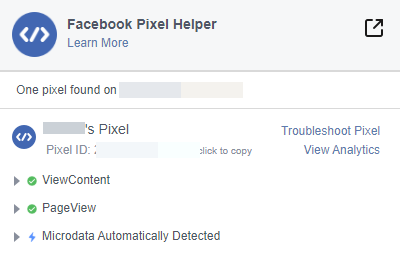
Option 1: Install Facebook pixel helper chrome extension so you can check if your pixel is active(on every page you visit) and what events were fired – See screenshot above. You can use the pixel helper to see if all events are properly fired too. Do yourself a favor and install the chrome extension πŸ˜‰

Option 2: Inside the pixel tab in Facebook’s ads manager, you can click on the pixel you’re using and test the events. Pretty simple, just follow the instructions.


3. Targeting

Targeting is the direction we point Facebook to look for our audience.

There are a lot of methods of targeting online – From one interest per adset to laser targeting, each one is considered to be “the best” and gives us the lowest CPM. My tip for you is just do what you want…

If you want to target huge interests with 50m+ audiences, no problem at all. If you want to test audiences as small as 50k, just do it. Go for what you think is the right audience and test it out

I heard small audiences give you very high CPMs – Well one of my best audiences were women 35-44 and the size was 13k. Not only this audience gave me crazy cheap sales but the CPM was about the same as all my other adsets($9~$11).

Small Audience Facebook Ads Good Results

Good thing I gave it a try right?

So if I were to listen to all the people saying small audiences don’t work, I would’ve lost plenty of sales because I had plenty of small audiences such as these running.

Now let’s look at something I never did and probably lost a lot of money: Before CBO campaigns, I never tested audiences larger than 1.5m. I thought for testing, audience size mustn’t be too big so I always kept it in the 1.2m~1.3m area.

If the campaign was already running and selling well, then of course I was testing HUGE audiences too and making sales. But maybe when testing one of my campaigns, I could’ve gotten much better results if I let it run on a 10m audience.

What audience sizes I personally test?

I have no problem testing big audiences and audiences around 100k. I can go for one interest per adset or multiple interests all layered down till I get an audience size of 100k. No particular method or anything special. If I feel the audience is right, I target it.

*I never used the expand detailed targeting option so I can’t really tell you if it’s good or not. But I think it’s worth a try if you have a good campaign going.*

My special rule:

I hate wasting money so I do a really good research and target only the audience I think will buy. If I target a hardcore cat lovers product, then I will allocate my budget and use most of it to test women 35+ because they’re more likely to buy it than a 22 year old girl.

If I sell a cute necklace gift for women, I will target only men and probably start from 25 or even 35.  You get the point.

Custom Audiences:

Above the country selection, you can see the custom audience targeting – This is where the audiences we made thanks to the pixel can be used. If you have a custom audiences of everyone who visited your site, you can just target them and offer a discount code for those who didn’t buy.

If there’s a new discount you don’t want your past buyers to see(so they don’t get upset), you can exclude them.

Country selection:

I usually target USA but I have no problem targeting Worldwide or Europe – It all depends on the product. Just make sure to select English(All) if your page in in english and you target Worldwide.

About the countries: If I go Worldwide, I target only epacket countries.

Interests:

I use it all – If I find targeting by income + interest is a better option than just picking only the interest, then I do it. If there’s a product only available to iPhone users, I will target only iPhone users and not “all devices”.

Placements:

I usually go with Instagram and Facebook feeds but only if it’s in my niche. If it isn’t, I leave the placements on Automatic and let it run. Once I get enough results, I know which placement works best and I shut down all the rest.

Important: By shutting it down, I mean the new duplicate adset I make will have only the working placements. I never touch a working adset because it can go back to learning mode and stop bringing results.

Optimization & Delivery:

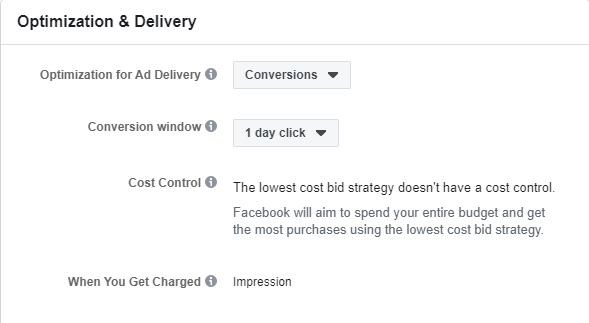
I leave it of course on Conversions and the only thing I change is the conversion window. I find the 1 day click window to work better when I look for people who are most likely to buy my product after the first click.

I know a lot of people who use the 7 day window with success and some say this window click stuff won’t change anything. I personally found out the 1 day window to work much better for me than the 7 day or others.

Some people mix it up and use 1 day for cold targeting and 7 day for when they retarget people. That’s because the retargeting audience are more likely to buy after a few days after they first clicked on your ad. It’s logical…


To Sum It Up:

As promised, the second part of the article is more detailed and I chose to speak about the campaign objectives, pixel and targeting.

Next week’s article will be all about different type of ads.

Thank you for reading and I hope you liked the second part of the series πŸ™‚


Struggling to find good products to sell? Not sure who’s your target audience? Tired of losing money on products you were sure were “winners”?

Then Ecomhunt is what you need! Find hot winning products that are added daily, spy on their ads & stores and import them into your store in 1 click and Start Selling Today!

Must Read Articles:

5 Dropshipping Youtube Channels You MUST Follow

4
Best Dropshipping Youtubers You Must Follow
5 Dropshipping Youtube Channels You MUST Follow

Dropshipping videos on Youtube isn’t something new and they’ve been there for years. But something happened and in 2019, dropshipping became the hottest niche there and some Youtubers talking about this topic gained crazy popularity.

This is a welcome change and it made dropshipping something everyone talks about. But the best change is the knowledge these Youtubers share for free, something which wasn’t done before, and help other people change their lives.

In this week’s article, I’m going to share 5 Dropshipping Youtube channels you MUST follow – Make sure to check out these channels and don’t forget to subscribe πŸ˜‰

find winning products to dropship


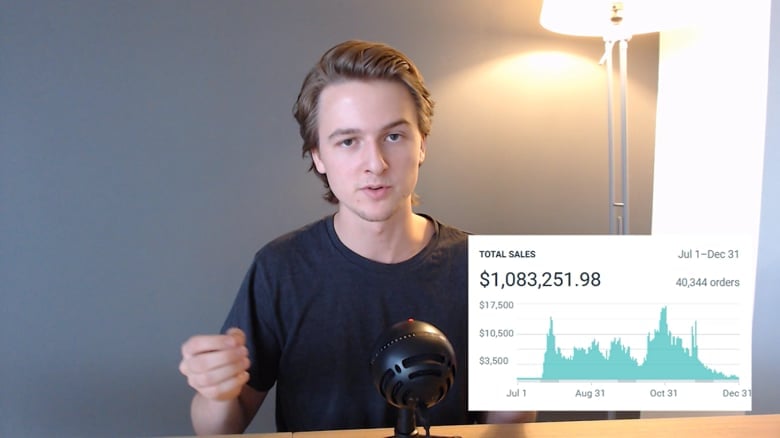
1. Gabriel St-Germain

When I hear “Youtube Dropshippers”, the first thing that comes into my mind is Gabriel St-Germain. He’s not a Youtube dropshipping pioneer and channels about this topic existed long before he came. But I think he was one of the first to really blow up on Youtube and gain a HUGE following!

His first videos were getting a good amount of views and that was mainly due to him sharing real stats with his viewers. This is something which other dropshippers didn’t usually share(at least not for free), so the viewers really liked it and he quickly gained popularity.

But his channel really blew up when he shared a free dropshipping course about how he made more than $600k in only 3 months! This is his most popular video with more than 1 million views and again, that’s because he did something almost no one did – Giving a full dropshipping course for free.

Although his channel isn’t active anymore(last video uploaded 6 months ago), I still recommend checking out his videos and the free courses. Lots of free knowledge and a lot to learn from him. Hopefully, he’ll be back soon with new videos.

Check his channel here => https://www.youtube.com/channel/UCqw27ZfS4aWdNhP1MDOldPA/featured


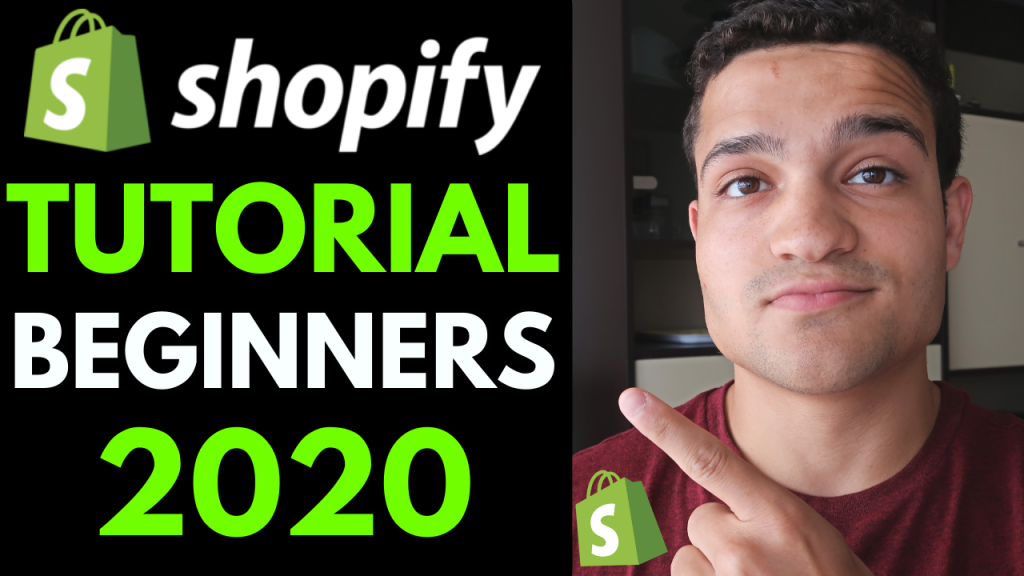
2. Verum Ecom

A rising star in Youtube with more than 42k subscribers gained after posting 11 videos and starting only 6 months ago. Verum Ecom is a rising star on Youtube when it comes to dropshipping, he’s already at the top!

Verum is a very experienced dropshipper with multiple 6-7 figure stores and he shares this experience with his subscribers totally for free. He shares free, 30min+ courses where he reveals everything – From his store, to his exact ad strategy and the product he used.

Some of these free courses cover CBO campaigns which as you already know will be soon the only option available. So if you’re looking to learn more about CBO, I recommend clearing some time and checking out Verum’s channel.

Check Verum’s channel here => https://www.youtube.com/channel/UCHMxkQsC2jpuhxhSvfzJ9CQ/videos


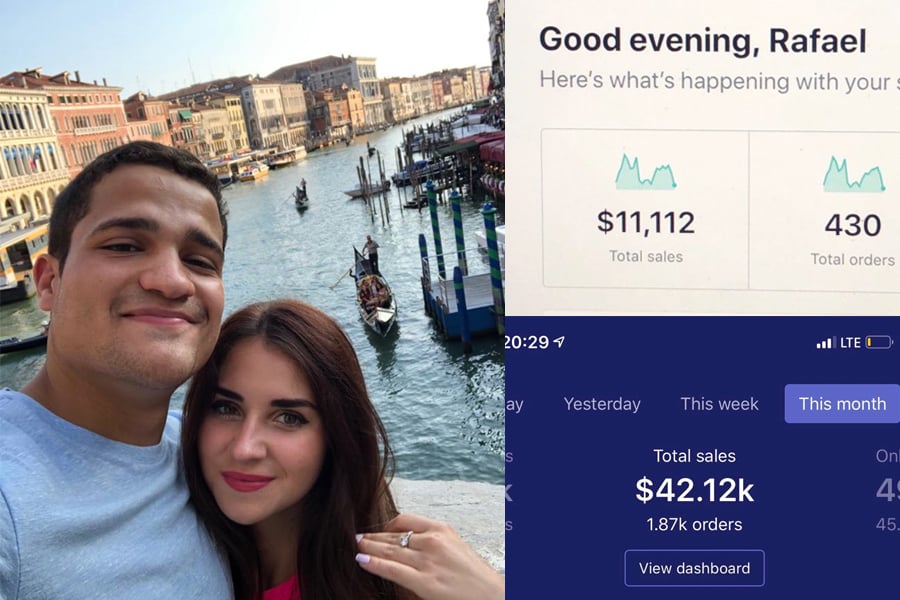
3. Rafael Cintron

Rafael Cintron is a very successful dropshipper with multiple 6-7 figure stores and he also runs a popular Youtube channel about dropshipping and Ecommerce in general. With more than 23k subscribers on Youtube, Rafael is definitely doing something right because the audience loves him!

On his channel he shares plenty of tips, free courses, case studies, automation techniques and much more. But he also shares some “negative” stuff like Facebook banning ad accounts and what to do if it ever happens to you.

He’s showing the bright side of dropshipping but doesn’t forget to show also the dark side, and this is something some of the dropshipping Youtubers fail to show. So if you’re looking to really learn about the good and the bad, then make sure to check Rafael Cintron’s Youtube channel here.

Did you know Rafael is also one of Ecomhunt’s success stories?

Rafael was able to build a 7 figure e-commerce business with the help of Ecomhunt winning products. We had an interview with him where he explains how he started dropshipping and gold tips with us. Read his interview in our blog here.

We also met in person with Rafael and had a great interview with him

In this interview, Rafael was kind enough to share with us his way of finding products, pricing techniques, video ad tips, Facebook ad strategy and much more. He also shared with us his failures – So if you’re a beginner, this is something you definitely want to know.

In this interview, Rafael also shared the exact product that made him A LOT of profit and I feel like it has still a lot of potential!

Check our interview with Rafael Cintron here.


4. Biaheza

Biaheza Youtube Channel

With a huge channel with more than 266k subscribers(!!), Biaheza is probably one of the most popular dropshippers on Youtube. If you check his channel, you will instantly understand why he is so popular – His methods of getting traffic, free and paid, are very diverse.

Biaheza doesn’t limit himself to only Facebook ads and shows multiple ways of getting traffic and sales. He shows how to approach Instagram Influencers / Tik Tok Influencers and shows the whole process to his viewers. From making the deal to the actual results after a day or two.

On top of that, he shows a lot of ways to make sales online. Flipping, day trading, and more… Like I said, he’s very diverse and I personally watch every new video he posts on his channel. I suggest you do the same πŸ˜‰

Check Biaheza’s Youtube channel here.


5. Oberlo

Oberlo Youtube Channel With Jessica

If you’re looking for a professional Youtube channel with some of the most interesting content, then Oberlo’s channel is what you need.

They post at least 4 high quality videos a week and each video is different and has much to learn from. From recommending hot products you can dropship right now to interviewing famous dropshippers. Jessica, the face behind the videos, does an amazing job and each video is a pleasure to watch.

My favorite ones is when they bring successful dropshippers and ecom company owners for interviews. In my opinion, that’s when you learn the most because they share a lot of interesting stuff about their way of work.

And if there’s one particular video I recommend checking out, it’s the interview Mordechai Arba, CEO & Founder of Ecomhunt, had at Oberlo HQ in Berlin last year.

Mordechai Arba Ecomhunt interview at Oberlo

Oberlo invited Mordechai for a cool interview last year so he can share with their audience his knowledge about dropshipping and recommend winning products to sell. I think you will find this interview at Oberlo very interesting and you will learn a lot πŸ˜‰

Check Mordechai’s interview at Oberlo here.

P.S

Ecomhunt works with Oberlo to make it easier for you to import winning products you find – Just click on the blue Oberlo button and the product will be in your Oberlo app on Shopify.


To Sum It Up:

These Youtube channels share A LOT of knowledge about dropshipping and everything related to e-commerce. If you’re a beginner, take some time off this weekend and go check these awesome channels. You won’t regret it!

Thank you for reading and I hope you liked this week’s article πŸ™‚

Good luck!


Struggling to find good products to sell? Not sure who’s your target audience? Tired of losing money on products you were sure were “winners”?

Then Ecomhunt is what you need! Find hot winning products that are added daily, spy on their ads & stores and import them into your store in 1 click and Start Selling Today!
Must Read Articles:

How To Create The Perfect CBO Campaign On Facebook – Facebook CBO Campaign From A to Z – Part 1

5
Facebook CBO Campaign Complete Creation Guide From A to Z Part 4
How To Create The Perfect CBO Campaign On Facebook - Facebook CBO Campaign From A to Z - Part 4

Welcome to the first part of how to create the perfect CBO campaign on Facebook blog series – It’s a 3/4 parts series to teach you exactly how to create your first Facebook CBO campaign. Each part will focus on a different topic and we’ll dive into the smallest of details.

In the first part, I’ll show you how we personally setup our CBO campaigns with examples and give brief explanations about some parts of the process. The next parts will be much more details and each week something else will be covered.

Pixels, targeting, conversion window, ad creatives, reading and understanding ad results, etc – Everything will be covered in this blog series.

In 3-4 weeks from now, you’ll know exactly how to launch the perfect test campaigns for your products.

find winning products to dropship


1. Creating Your CBO Campaign

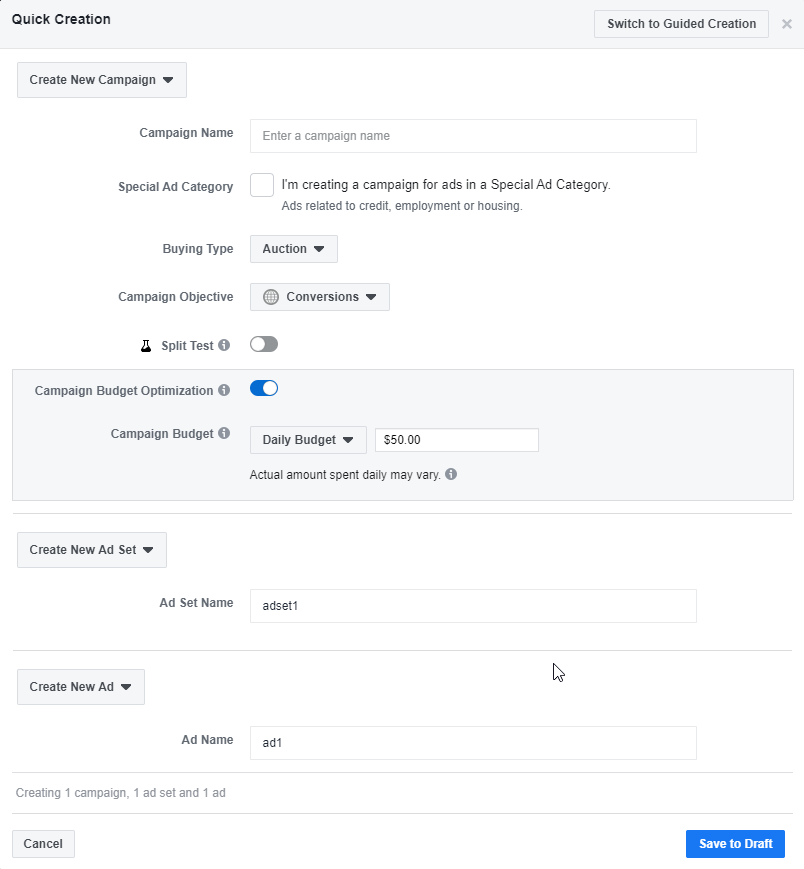
After clicking the green “create” button and choosing “quick creation” option, this is the first screen we’ll see. Here we’ll have to choose the campaign objective, our budget, and name our adset and ad.

Campaign objective:

We always go with conversions for our tests because we are looking for conversions and not link clicks or engagements. Facebook will deliver exactly what we choose – If you choose Post Engagement, you will get people who are most likely to share/like/comment on your ad. If you choose Traffic, you will get people visit your site. If you choose conversions, this is where we’ll get people who are most likely to buy our product.

Campaign type:

I still have the regular, adset level budget campaign option but it will be soon gone and only CBO will remain. Campaign Budget Optimization campaign is the one we’ll be talking about here. Our budget is set on campaign level and it will be distributed through our adsets by Facebook.

Campaign budget:

We start anywhere from $50 a day to $100 for our tests. Here it really depends on how much you can afford to spend…


2. Choosing Your Pixel And Conversion Event Optimization

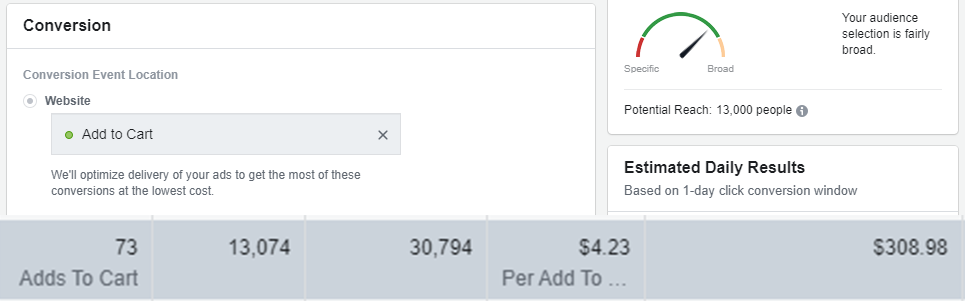
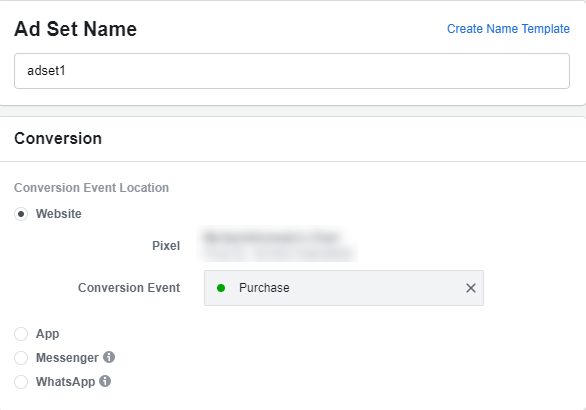
The first thing we see on the adset level is the pixel and the conversion event. Here we need to choose the Facebook pixel we’re going to use and the optimization event.

If you have only 1 pixel in that ad account, it will be already displayed there. And if you have more than 1 pixel, you will have the option to choose your pixel. Make sure to choose the correct pixel you have on your store.

The conversion event we ALWAYS go for is Purchase and it doesn’t matter if the pixel is new or old. Red or Green dot, I suggest always choosing purchase optimization.


3. Choosing Your Targeting

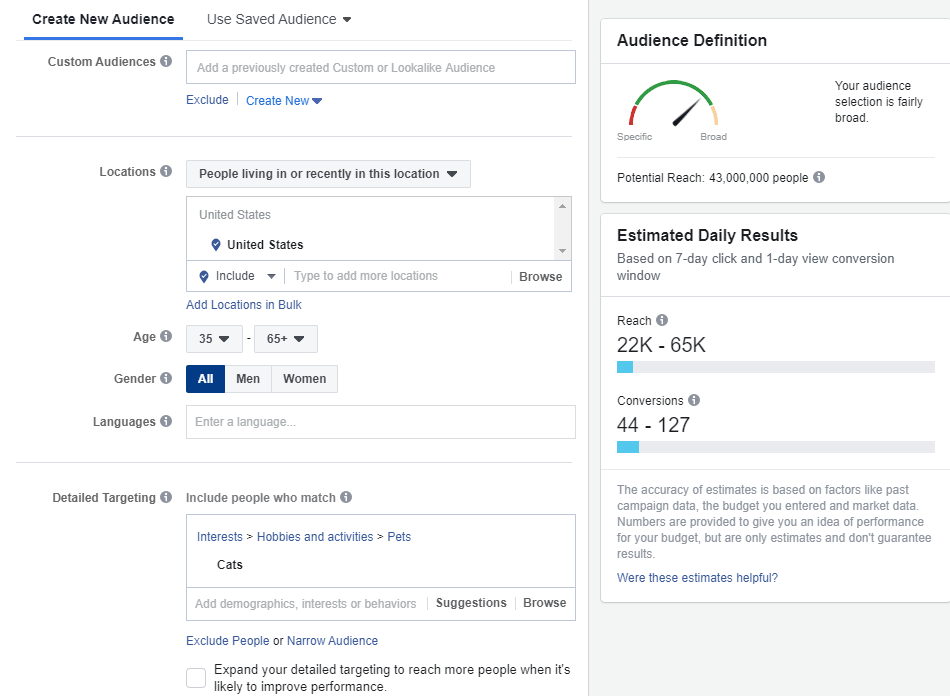
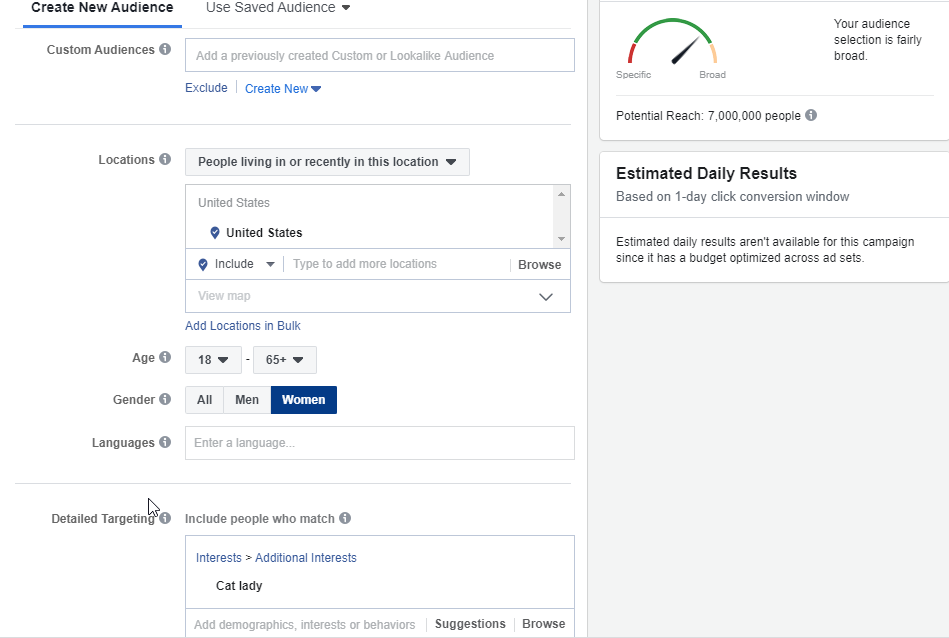
The next step is to choose your targeting. We start from the country we want and we usually go for USA, USA + mix, or just Worldwide. It really depends on the product you’re selling, your shipping options, the language, etc.

Age group – If most of your audience are females, choosing men will be just a waste of money(at least when testing).

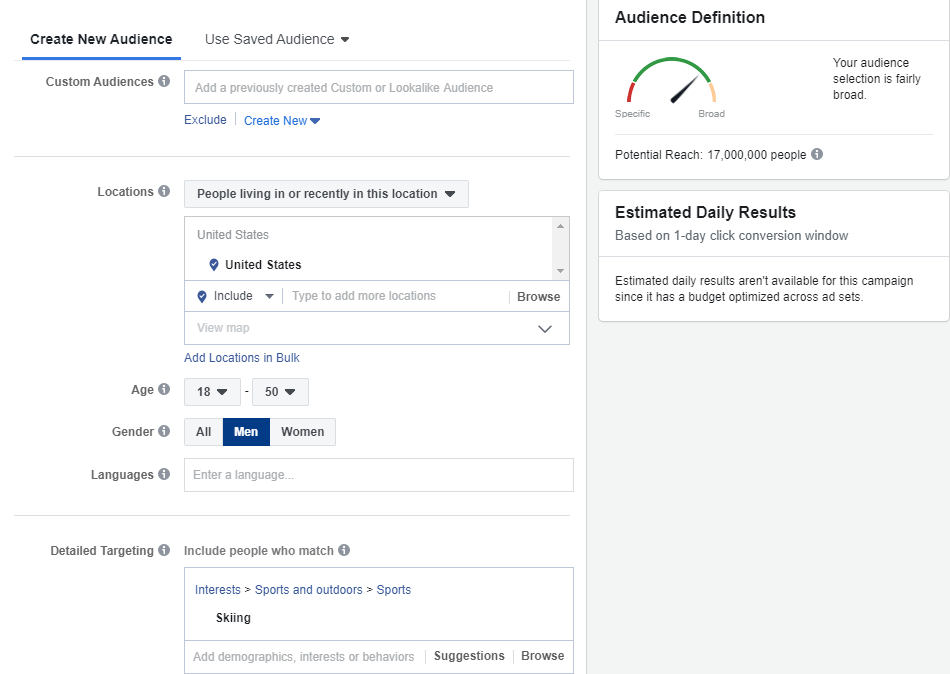
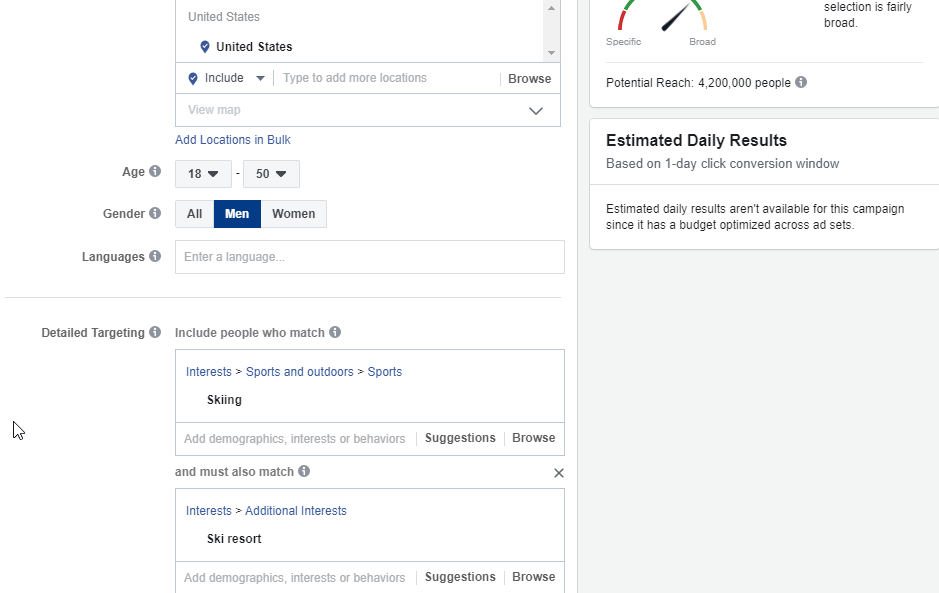
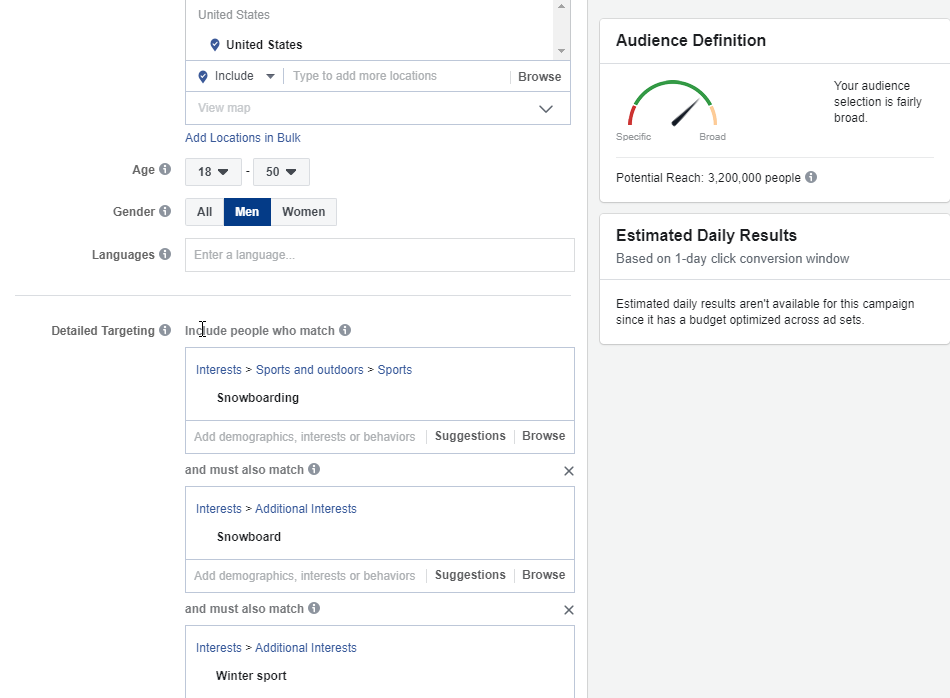
Detailed targeting – This is where we pick the interests we need and check what size we get. Facebook collects a lot of data on us and we have endless options we can use.


4. Choosing The Placement

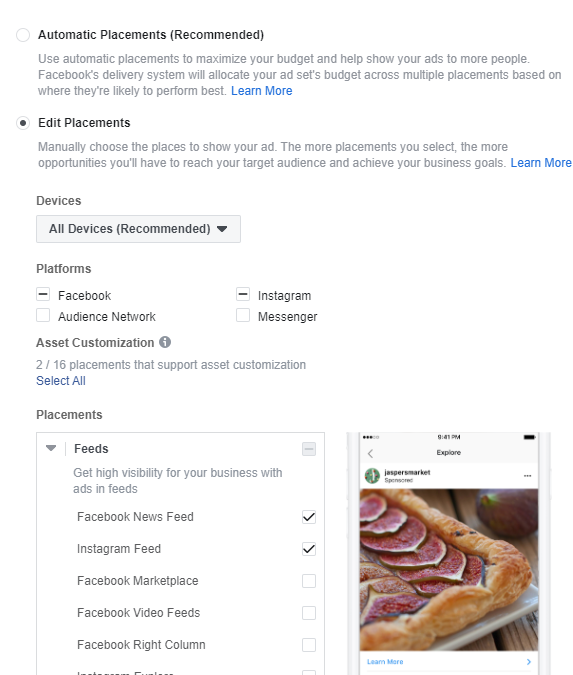
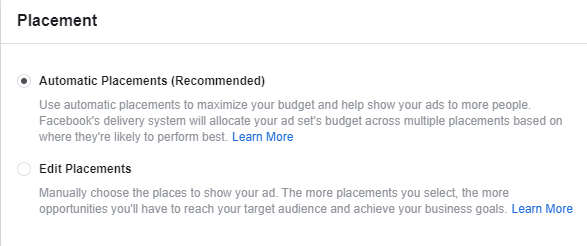
The next step is choosing the placement – This is where we want our ad to be displayed. When testing our products, we now usually start with the Automatic Placements option and let Facebook test all options. It’s usually Facebook and Instagram feeds that work best but we also had some nice sales coming from the marketplace so it’s worth a try.

Once you get enough sales, you can later decide to test new campaign with the winning placements.

For some of my campaign where I know Instagram and Facebook feeds will definitely work best, I remove the all placements options and choose the Insta/FB feeds manually.

All devices when testing.


5. Choosing The Optimization & Delivery

The last thing we need to do on the adset level is to choose the optimization delivery and the conversion window.

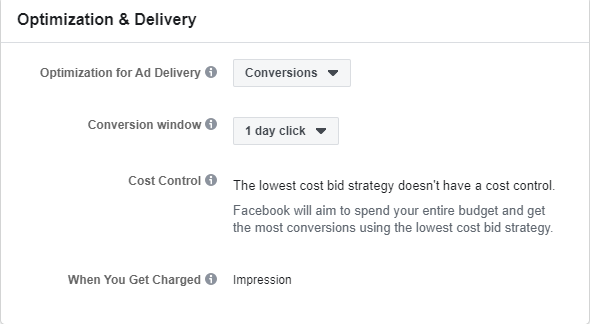
Optimization for Ad Delivery – We leave it at default which is Conversions. We’re looking for people who are most likely to buy so this option is what we need.

Conversion Window – We use 1 day click. The conversion window is how much time in average it takes the customer to convert and in our case, we want the people who do it right away. Meaning that they convert after the first click.


6. Choosing Your Page

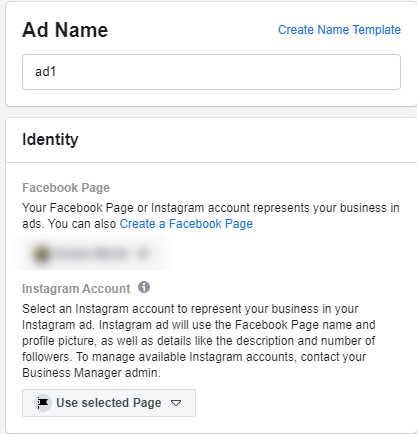
The first thing we see on the ad level is the Facebook and Instagram page we want to use to run our ads from. You have to be at least an advertiser on a page to run ads from it and all you have to do here is to choose your page. Same goes for your Instagram page.

If you don’t have an Instagram page, Facebook will create a “blank” page account so you can run ads on Instagram. People will see the name of your page but it won’t exist.


7. Creating Your First Ad

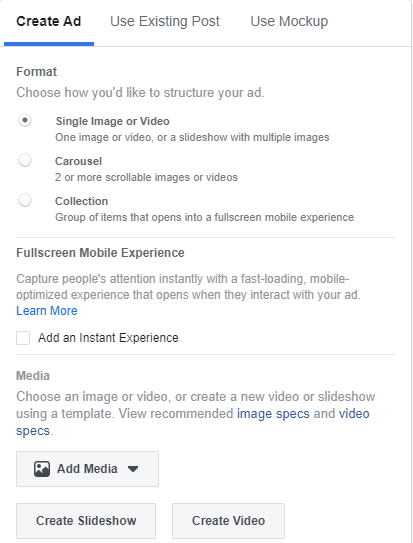
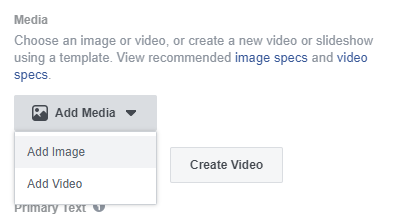
The next step is to create our ad. We can use a single image/video ad, a carousel ad or a collection ad. We usually just upload our photo ad or a video ad by clicking on the Add media button below and choosing our photo/video.

We don’t use Facebook’s Slideshow or Video tools to create our ads. It’s too basic.

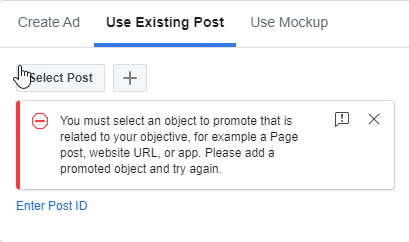
The second option is to use an already existing post:

Here you can save time and just pick an existing post you have on your Facebook/Instagram page to run as an ad. If you can’t find the post, you can always select it by entering the Post ID.

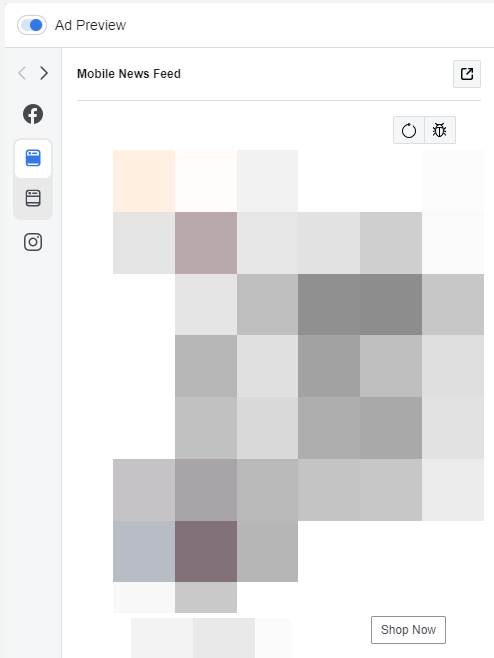
We then see on the right side a preview of our ad and how it will look on all the placements we chose

We can edit every placement and make necessary adjustments or leave it as it is.


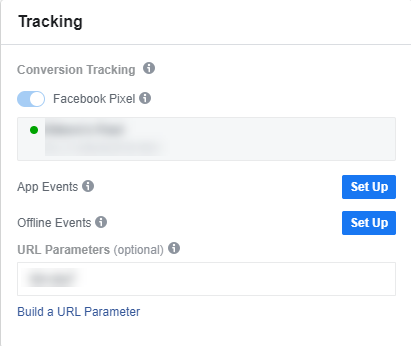
8. Checking Your Conversion Pixel And Building URL Parameters

The last step is to see if the conversion pixel appears as it should and to build your URL parameters.

The conversion pixel usually auto appears and it will successfully track the events on your store.

The URL parameters are there to help you track your conversions in other ways like Google Analytics or even on Shopify and I usually use it. As you already know, sometimes Facebook fails to register some events and we don’t want to pause a good adset/ad. I use URL parameters for my own insurance πŸ˜‰


To Sum It Up:

This article is just the appetizer and we will really go into details starting from Part 2. We need to cover more about the different type of objectives, pixel events, targeting, ad examples, multiple ad testing, ad results and how to read them.

As promised, EVERYTHING will be covered and you will never need another guide to understand how to launch the perfect Facebook ad campaign.

Thank you for reading and I hope you liked the first part of the series πŸ™‚


Struggling to find good products to sell? Not sure who’s your target audience? Tired of losing money on products you were sure were “winners”?

Then Ecomhunt is what you need! Find hot winning products that are added daily, spy on their ads & stores and import them into your store in 1 click and Start Selling Today!
Must Read Articles:

Learn To Read And Understand Facebook Ad Results

7
Facebook Ad Results Read and Understand
Learn To Read And Understand Facebook Ad Results

We pay Facebook our hard earned cash so they deliver our ads to the right people. In addition to that, we also get valuable data about our targeted audience and metrics like CTR, CPM, CPC, etc. These metrics are here to help us understand how our targeted audience interacted with our ad and what actions were made by them.

If we don’t know how to read and understand these metrics, then we’re throwing our money away. So it’s really important we know how to take the data Facebook gives us back and pinpoint the mistakes we did so we can fix them.

In this week’s article, I’ll help you understand what these metrics mean and how to read them in order to find the problems in your ad/store.

find winning products to dropship


CPC – Cost Per Link Click

CPC is a really important metric and it tells us a lot about the ad we’re running – It’s one of the first things I look at after checking the results of my test ads. By looking at my CPC, I can understand how the targeted audience reacted to my ad.

If I had cheap link clicks, it can only mean the targeted audience stopped scrolling and actually watched my photo/video ad and then took time to click the link on it to visit my website. I caught their attention and the offer was interesting enough for them to click on it. And of course my targeting was on point too!

If my link clicks were expensive or I barely got any, this means my ad or targeting wasn’t good enough. It’s possible the interests I chose were not that good or my ad + offer wasn’t good enough to catch their attention. In most cases I’ve seen, targeting wasn’t the problem… Targeting is pretty simple and almost everyone nails it after a few tries. The ad tho is the real challenge and making a good ad is not an easy task.

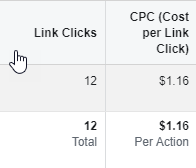
When testing, I expect my link clicks to be pretty cheap – My cost per link click is usually lower than $1 but sometimes they’re higher and I’m fine with it to a certain number. $1~$2 CPC is normal but I will be a bit nervous if I don’t get any Add to Carts/Initiate Checkouts soon.

As you can see, my CPC in the photo above is $1.16 which is fine. I also have a 2 orders for that adset so it’s working great. But if my CPC was $2 and I had no Add to Carts, then I would probably kill it and move on. I don’t like waiting too much on bad adsets.


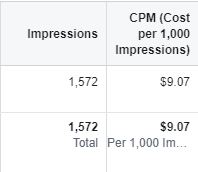
CPM – Cost Per 1,000 Impressions

CPM is how much we pay per 1,000 impressions – Unfortunately, we don’t have much say here and the one who decides how much we pay is Facebook. But we can still work on our CPM in order to reduce it if it’s too high.

We need to look at the niche – Competitive niches will cost more and we can expect our CPMs to be much higher than CPMs for other niches(like mine). If I were to target the cat niche, I’m more than sure my CPM wouldn’t be $10 like in the photo above. I didn’t target the cat niche for some time now, but from what I remember I had CPMs higher than $20, sometimes even $30. Now this doesn’t mean you won’t get cheap link clicks or sales, you only have to invest more money.

We need to look at our ad – Facebook likes it when the content on their platform is good. If I launch a good ad which brings good engagement and my targeted audience like it, Facebook will lower my CPMs even if I’m in a highly competitive niche. It won’t be a huge drop but it can save us a few bucks. If the ad sucks and no one even stops for 1 second to give it a look, we could get higher CPMs.

We need to look at our ad account – Facebook isn’t perfect and you already know bugs and stuff like that happen which can affect our delivery. I occasionally help users and guide them and I remember seeing really crazy CPMs like $90 or even $150. Of course, ads like these need to be stopped right away but if the same thing repeats itself no matter what you do, it can be a problem in the ad account. So one of my suggestions was switching to a fresh ad account with a fresh pixel and it worked. The new ads had normal CPMs. If you ever get some crazy CPMs, you can only wait it out or switch ad account if it stays the same.

We need to look at our targeted interests – Even in a highly competitive niche, some interests may get us a much lower CPM than the average. When everyone targets the same interests, you need to be smart and look for some “hidden” interests people tend to never even look for.

Like I already said, usually there’s nothing we can do about CPMs and we can only hope to not pay too much.


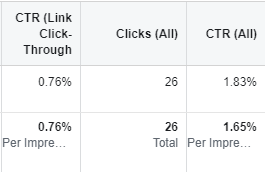
CTR – Click Through Rate

CTR is a pretty basic stat and it shows us how many people clicked on our ad(in percents).

We have 2 CTRs as you can see in the screenshot above:

  • The first one is the Link-Click CTR and it shows us the percentage of people who actually clicked our link.
  • The second one is the CTR(all) and it counts any click on our ad.

By looking at our CTR, we can understand how people react to our ad. If the CTR is too low, we should consider changing something in our ad so we stop more people from scrolling and hopefully clicking our ad. It can be our ad copy or the ad itself. Maybe our Call-To-Action isn’t that appealing? Or the video ad beginning isn’t too interesting? And what about our offer? 50% OFF looks better than 25% OFF πŸ˜‰ These are some of the stuff you need to consider looking at and changing if your CTR is too low.

As you can see from the photo above, my CTR isn’t that great. My CPM is great and the CPC is fine but the CTR needs an edit so I can squeeze more link clicks πŸ™‚ This ad has 2 sales and it just shows me the people love my product BUT my ad could use a little lift.


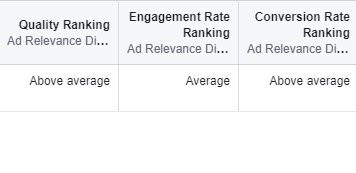
Ad Ranking

This metric shows us the rank of our ads.

The quality ranking shows us the quality of our ad compared to the average. Facebook likes quality so I guess it’s how people react to our product and how relevant it is to the targeted audience. I guess it’s the same as relevance score. So as you can see, my score is above average and it means I’m doing good and my ad is relevant to my targeted audience. If my score was lower, trying new audiences could help us get a better score.

Engagement rate ranking shows us how our ad is doing with getting engagement compared to the average. Here I’m ranked only average. Maybe if I adjust my ad and make it more catchy, the CTR will be higher and the engagement rate will be above average.

Conversion rate ranking shows us how how our conversion rate compared to the average. In this case, I’m above average and it just shows that the product I sell is really good and people are willing to spend their money to get it. If everything else was good and my conversion rate score was low, then a change in the store or product are needed. Maybe the price is too high? Maybe the product page loads slow? Maybe the problem is in the checkout process? If you read my articles on this blog, you already know how to pinpoint the problems on your store by now. If not, make sure to go through my recent posts πŸ˜‰


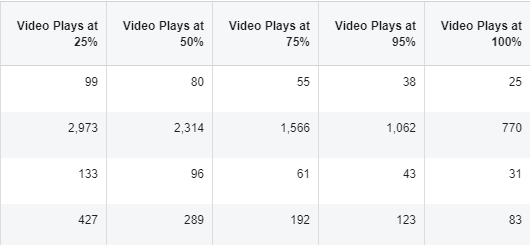
Video Plays

Video plays show us how much of the video our audience actually watched. By checking these stats, we can learn how interested our audience was in our video and how good our video is. In the picture above, you can see our stats and I’m confident to say they’re pretty healthy.

A big chunk of the audience who watched 25% stayed and watched at least half of our video. And 1/3 of the total viewers watched the whole video. These are good stats considering people can barely concentrate for 20 seconds anymore. And of course, this campaign brought us really good sales so it’s working alright πŸ˜‰

But what if the only half of the 25% plays stayed to watch till 50%? This would mean that a big chunk of our audience wasn’t interested enough to keep watching at least half of our video. In this case, we need to adjust the structure of our video. Make it more interesting, show different footage, show something to keep them watching. We need to have a healthy watch ratio so we can later build good lookalike audiences.


To Sum It Up:

In this article, I showed some of the ad metrics I pay attention to when testing my products. I explained what each one of them means and what results are “good” and what are “bad”. By understanding these metrics, I can pinpoint the problem(if such exists) and act accordingly to fix it and have a better chance to get sales.

I’m sure this article will help you understand your metrics a little better now and if you have any questions, ask in the comments πŸ™‚

Good luck!


Struggling to find good products to sell? Not sure who’s your target audience? Tired of losing money on products you were sure were “winners”?

Then Ecomhunt is what you need! Find hot winning products that are added daily, spy on their ads & stores and import them into your store in 1 click and Start Selling Today!
Must Read Articles:

Winning Product #20: Cool Travel Pillow With Full Testing Strategy Using Facebook Ads

4
Winning Product Facebook Ads Strategy
Winning Product #20: Cool Travel Pillow With Full Testing Strategy Using Facebook Ads

This week’s product is this cool travel pillow.

I saw this pillow on aliexpress and absolutely loved how’s smart it is! It has plenty of 5 star reviews and seems like a really good product to test. It’s a bit expensive but when it comes to comfort, people will open their wallets πŸ˜‰

What I like most about this product is that it opens a HUGE niche to us which is the “Travel” niche. Tons of products we can sell to this audience and each day something new pops up we can dropship. Make sure to look around and maybe you’ll find something much better to sell!

So let’s jump in and see how can we sell this travel pillow with ad examples, selling strategies and more.


find winning products to dropship

1. Campaign Type & Optimization:

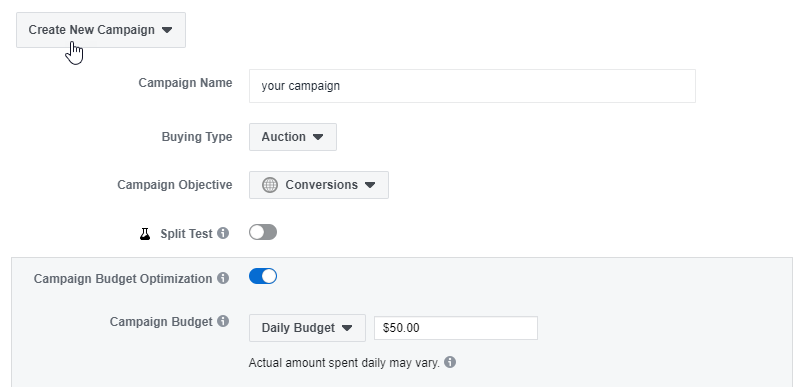
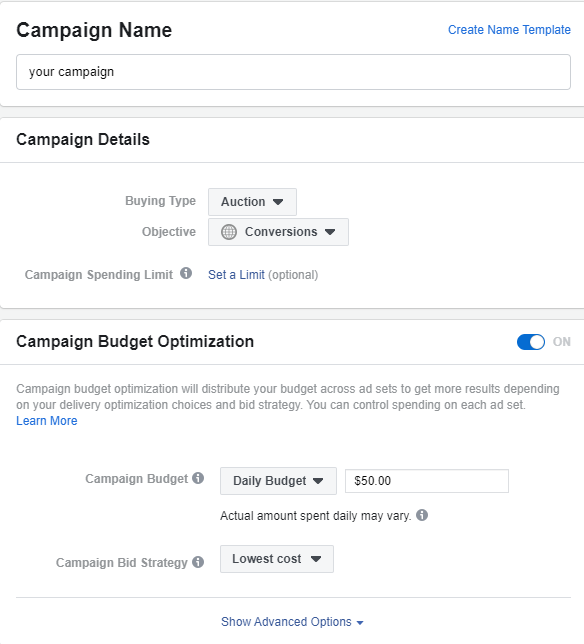
We start by creating a new campaign and choosing CBO. If you’re still not sure about CBO and don’t want to test it out now, then go for the regular adset level campaigns. My advice is to start testing CBO now so when it’s finally here, you will at least have some experience running CBO campaigns.

The next step is to choose your daily budget and I usually go with $50.

*This is just a suggestion and you can always use a lower/higher daily budget.*

Go with purchase optimization.

You can always try optimizing for other events but I strongly recommend to go with Purchase.

And Don’t let Facebook scare you with red colors or warnings about your pixel having 0 data and stuff like that. We go with purchase optimization and we shouldn’t care about our pixel having 0 data.

Purchase Optimization – That’s it.


2. Number of Adsets & Daily Budget:

I usually test 3 to 5 adsets per CBO campaign with my $50 daily budget. I target Worldwide(all epacket countries only) or just go with USA/CA/UK – It really depends on the product and the research results. If your product suits only the US audience, targeting Europe will be just a waste.

Test different targeting options and don’t be afraid to test big audiences like 20m+. CBO is pretty good with big audiences so feel free to test all audiences no matter their size.

Each adset has at least 2 creatives(photo/video) and then I kill the bad ads and keep the one which brought me sales.

I set no minimum or maximum spend per adset and let Facebook do it’s job. CBO is more stable now so I just let it run.

Important: If you’re not ok with Facebook taking the lead and want to have more control, then make sure to read my article about how to test products with CBO. I talk about 4 ways you can test your products with CBO ads, and the many options you have like controlling the ad spend of each adset. And if you really hate CBO and don’t want to use it, then I also talk about a method there which “replicates” the old ways of testing and can fit your needs.

And if you have no clue what CBO is, then here’s 5 things you should know about Facebook CBO campaigns. Read this article and then move to the second article about the testing methods.


3. Targeting & Strategy:

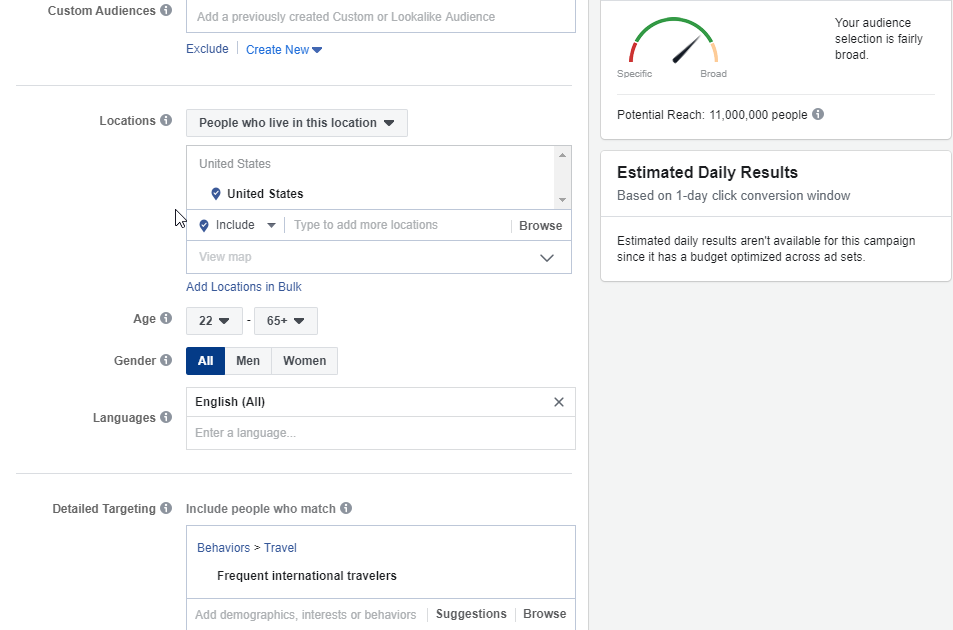
Targeting isn’t hard and I remember Facebook having some interests like “frequent traveler” we can use. We’ll target both genders and in my opinion, targeting Worldwide(epacket countries) will be the best option and not just the US.

For this example, I will show you only USA targeting – You can copy exactly my targeting but I suggest targeting Worldwide + Language(english all). Exclude “bad” countries or just manually add all the good ones like USA, Canada, Germany, France, UK, etc.

There are a few more interests I will use and you’ll see them in the targeting examples below πŸ˜‰

3 to 5 adsets per CBO campaign – In this case, I’ll go with only 3 just to show you the examples. Feel free to add some more.

Here’s the targeting I chose:

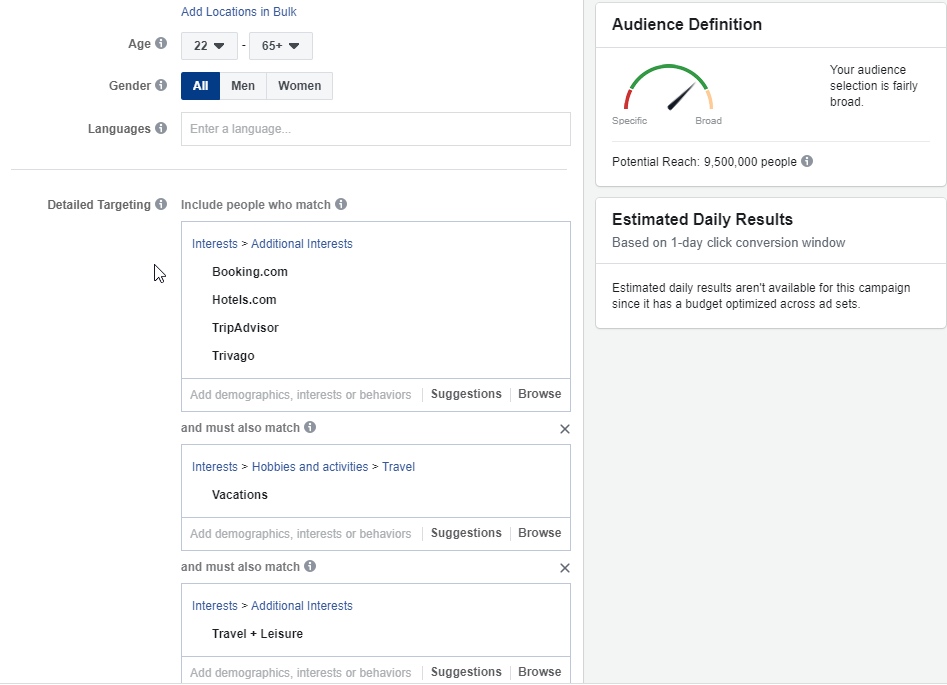
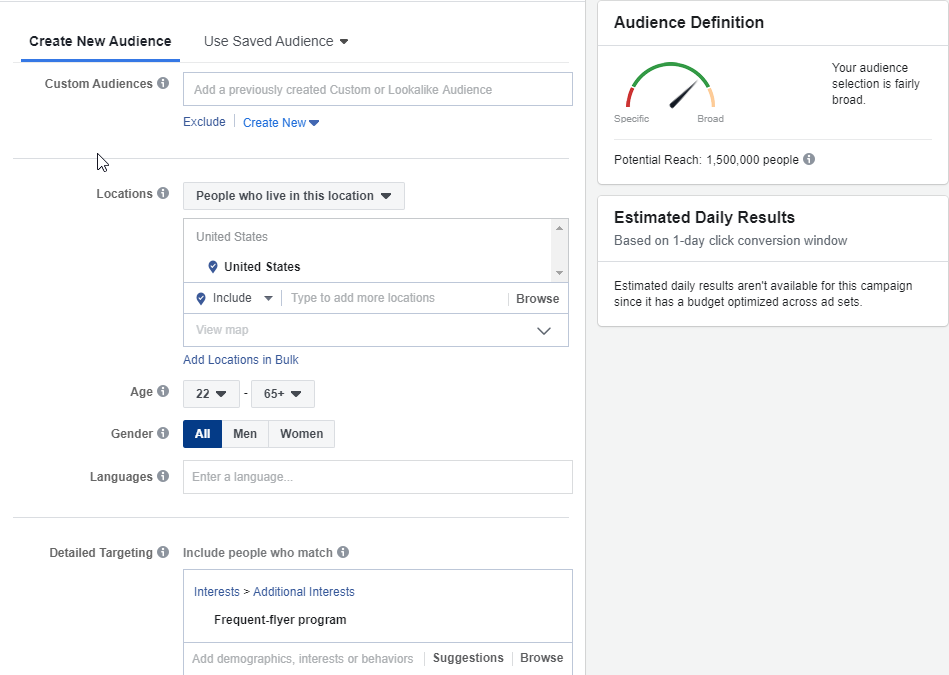
  1. Men&Women(age 22-65+) & frequent international travelers – A superb interest to use which gives us the option to target people who traveled at least twice in the last 6 months.
  2. Men&Women(age 22-65+) & travel/vacation interests + flight/hotel booking websites – I went for the biggest booking websites and narrowed it down with some generic travel interests
  3. Men&Women(age 22-65+) & frequent flyer program – A good interest to try to catch those who are interested in joining this program or are already there.

If you missed the previous winning product article, I explained there that I’m no longer afraid testing big audiences. I used to test audiences lower than 1.5m but now with CBO, it’s not a problem anymore.

Important: It doesn’t mean small audiences don’t work… If you want to layer it down and test an audience of 100k then just go for it. If you feel there’s a really good but small interest with exactly the people you need, then test it in one of your adsets.

Men&Women(age 22-65+) & frequent international travelers:

Men&Women(age 22-65+) & travel/vacation interests + flight/hotel booking websites:

Men&Women(age 22-65+) & frequent flyer program:


4. Ad placements:

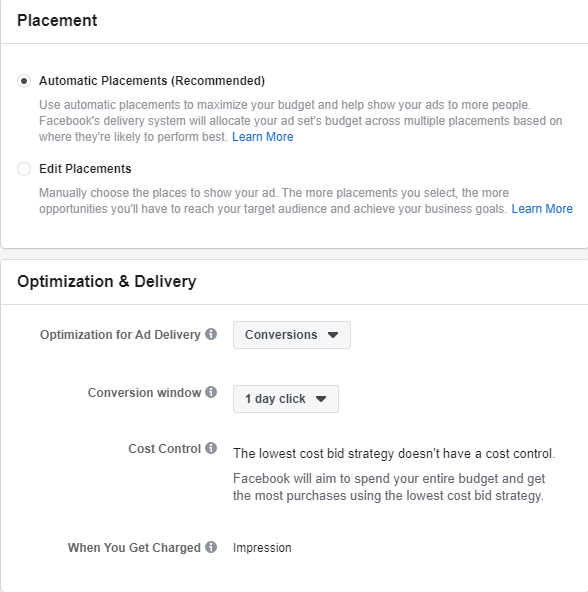
One more thing I do differently now is in the ad placements – With CBO, I just go for all placements and let it run. Later I just keep the placements that worked best and close all the rest.

Spoiler: It’s usually Facebook/Instagram feeds so you can always just go for these from the beginning if you feel all placements is a waste.

Optimization is of course for conversions and I go for 1 day click conversion window.


5. Ad Type & Copy:

In my opinion, this product isn’t going to work with just photo ads. We need a quality video ad to show all the features and the different sleeping positions. We have a nice video there we can work with but the quality is not that good. It’s possible to create a video ad with 2 black bars and text on it like “THIS TRAVEL PILLOW IS AMAZING!” and just run with it. But I would ask the seller if he can provide a better quality video and if not, search for other sellers on aliexpress with the same or similar product. Maybe they have a better video for us to use.

I strongly recommend you try creating a video ad for this product and not just go with photo ads. But again who knows, maybe photo ads will work too.

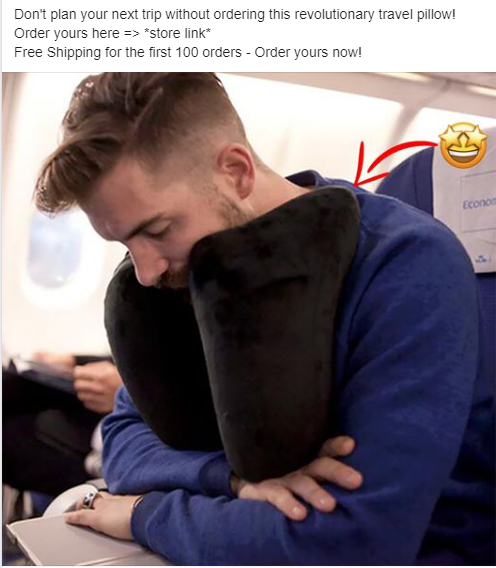
I can only show you photo ads so here are the photo ads and ad text examples I created.

Examples:

1200×1200 photo ad:

1200×1200 photo ad(version 2):

Test at least 2 creatives in each adset


6. Product Pricing & Selling Strategy:

Setting a price is an important step that if done right will help you keep getting sales with a healthy conversion rate. And if done wrong, your conversion rate is going to suck or you won’t even get any sales.

Product price on aliexpress is $12 and the shipping is free(epacket usa).

We can try selling this pillow for $24.99 + free shipping or maximum $29.99 + free shipping. I would test it out first for $24.99 and if it goes well, we can increase the price. When it comes to comfort, especially for flights, this pillow if marketed correctly can sell for $30.

Selling Strategy:

Quantity discounts is a must for this product! They can get an extra pillow for a family member or just as a backup in case this one gets lost. Offer a 10% discount when ordering 2 items and add an additional 5% discount each time the customer ads another one.

Chinese New Year:

You can start marketing this product once everything is back to normal in china. Please read the previous winning product article – I wrote there what you can do for now and how you can still sell products.


find winning products to dropship

Summary:

You can test this product or look for something else but the most important part is the niche. This niche is HUGE and we have tons of utilities we can sell and it’s possible to create a full store around this niche. If you can make sales and start getting data, then you will have no problem pushing more products to this audience.

I hope you liked this week’s winning product article – Feel free to ask questions in the comments.

Good luck!

Looking For More Winning Products?

Ecomhunt got you covered  Discover winning products that are selling right now and get access to our analytics, ads, targeting suggestions and much more. We made it easy for dropshippers to find the best products to sell online.

Click here to join now for free πŸ™‚


Must Read Articles:

Getting Traffic But No Sales? Here Are All The Possible Causes and Solutions

18
Traffic But No Sales Fix
Getting Traffic But No Sales? Here Are All The Possible Causes and Solutions

In this week’s article, I’m going to answer one of the most asked questions online store owners have and provide possible solutions to fix it. If you’re getting a considerable amount of traffic to your Shopify store and have no sales, then this article is for you.

I’ll probably make this one a weekly series to help you in your e-commerce venture. Let me know in the comments if you want more and make sure to submit your burning questions – Maybe I’ll pick one and talk about it next week.

find winning products to dropship


Lots Of Traffic But No Sales?

It’s probably one of the most popular questions out there, and a lot of online store owners are desperate to get that one solution which will fix their problem to finally convert the traffic they get into sales. Unfortunately, there isn’t a magic solution and this problem can’t be fixed with one simple tweak.

A lot of factors come into play here and figuring out the problem based on a simple Shopify dashboard solution is impossible. The only way for a person with knowledge in the e-commerce world to help in this case is only if he can get all the needed information like: Ads strategy(targeting, budget, campaign type, etc), store, product, price, product page, and more.

So as you see, you basically need to sit with an experienced person 1-on-1 and dive into your store and everything you did to get an answer and a possible solution. This will take at least an hour or two and this isn’t something a stranger on Facebook will do for free.

But don’t you worry because I’m here and I’m going to provide possible causes for this problem and the possible solutions to fix it. You’ll just need to identify the cause and follow one of my solutions. So let’s begin!

The causes to having lots of traffic but no sales and the possible solutions:

You’re using the wrong campaign objective – Even if your ad is excellent and the product you’re trying to sell is something your audience really needs, it won’t help you if you’re using the wrong campaign objective. If you want to get sales, you HAVE to choose a Website Conversion campaign and go for the “Purchase Optimization”. It doesn’t matter if your pixel is new and has no data, we always go for the purchase optimization. Don’t go for Post Engagement or Website Visits campaign because Facebook will deliver exactly what you asked for: Want more engagement? Then use an engagement campaign. Want more sales? Website Conversion campaign it is!

Your price is too high – I’ve seen plenty of cases where people took a great product and tried to make x3 from it’s original cost. It could be because they genuinely think the product is worth it or maybe because they were a bit too greedy. So the ad and everything else was perfect but in the end, you can’t fool the customer. If the price isn’t right, he’ll just go away.

Your store is slow – Customers don’t like waiting and it’s the same for both physical and online stores. You make him wait an extra second for your store to load? Congratulations! You just lost a customer. In order to maintain an online store with a healthy conversion rate, it’s important for your store to load fast – If you suspect your loading speed is slow, then make sure to run some tests on various “speed test” websites. Upload only compressed pictures and use Shopify apps that can automatically do it for you. Don’t bombard your product page with heavy GIFs and spammy apps. Make sure the customers gets a fast and clean buying experience.

Your store is spammy – Everyone hates spammy websites with annoying popups and notifications and if you do this on your store, your chances to get sales drastically decrease! Make sure you provide a clean buying experience for your customers and use non-spammy apps. If you’re using an exit popup app, make sure it only pops when the customer is about to leave your store. Are you using a Facebook chat button? Make sure it doesn’t bother the customer on your store and that you really need it(having this button with no real plan is just a waste so you better delete it). Timers, deals, bright red color text messages, etc are OK only if you use them in a correct way. Don’t just activate all the scarcity features for one product… It will look bad and drive your customers away.

Your product page is bad – A perfect ad cannot lead customers into a sh*tty(excuse my french) product page. Hey, even if your ad sucks, you still can’t allow your product page to look bad because if it’s good enough, it can save you and drive sales even if your ad was bad. So make sure your product page is PERFECT. Don’t forget any important details like special product features or sizes… The customer won’t buy a product if he can’t get all the necessary details. Use a logical structure and don’t just copy Aliexpress descriptions; You can always check my article on how to build a high-converting product page and follow it. OR just learn from other successful dropshipping stores.

Wrong targeting – You want to target buyers and not just random people around the world. Make sure your targeting is good and points your ad to the relevant audience. And don’t just target Worldwide because even if your ad is bad, targeting people from countries like Nigeria, Pakistan, India will still drive tons of traffic but this traffic will probably not convert.

Lack of Trust – If you’re driving traffic from Facebook, it won’t be a problem opening a page with the letter “S”(short for scam) as a logo profile picture and drive traffic to your store from this page. But once the customers are inside your store, they’re going to look around and check your store’s name, your logo, look for trust badges, etc. If you have a bad logo which looks like it was made by a designer in Thailand’s markets, you will lose your customers. If your store name sounds and looks like scam(“bestdealzzz”) then you can forget about getting any sales. And so on… Your store is your real business so make it look and feel like it is.

No currency converter – If you’re targeting worldwide, it’s best to convert your currency according to your customer’s location. Some people don’t like it when only $USD is shown and prefer getting the price in their own currency. This will save them time and the checkout process will go faster. It’s not a critical issue but if possible, show them their own currency for a better experience – the checkout process will still be in USD.

These are the cases when you have just views but not any other events like Add to Carts and Initiate Checkouts – But what if you have some Add to Carts but no sales?

If you have some Add to Carts, it means people were interested enough in your product and felt confident enough to add it to their cart. There are multiple reasons why they didn’t continue with their purchase and I’m going to list them below and offer a solution(if such exist).

They’re not ready to purchase at this exact moment – It happens when a customer can’t purchase your product at the exact moment and in order to “save” it, he clicks the Add to Cart button and leaves your store. The customer thinks that he will eventually get back to your store and buy it so it’s like a reminder for him(which almost never works). In this case, it’s our job to remind him about the product he added to his cart by using retargeting ads and email reminders. Hopefully our retargeting ad or email will pop exactly when he gets his pay and he will finally complete his order.

Something unexpected happened and he had to leave – In the end we’re dealing with real people and sometimes there’s stuff happening. Maybe he got a call and had to take it? Maybe he was on his way to work and it was his station so he put his phone back to his pocket? Etc… So the solution is again to get the customer back to our website by using retargeting ads, email marketing and other techniques.

Lack of Trust on your checkout page – You need to have all the needed policies and trust badges for your customers to feel confident enough to enter their details and move to the next page. If it’s just a blank checkout page with no policy links and logo, then you’ll see a lot of customers just leave and not continue with the checkout process.

Mandatory fields  – One of the most common mistakes that pushes a lot of customers away is having the phone number or company name set up as mandatory. A lot of customers don’t care about giving their home address and email but when it comes to their phone number, they’ll never expose it if it isn’t necessary. And it doesn’t matter if the phone number is only used by the shipping carrier, they simply don’t want to give it to you and you need to make this field optional.


What if you have Add to Carts and Initiate Checkouts but no sales?

So the customer loved your product and trusted your store enough to add it to their cart and enter his shipping details. But something stopped him in the last steps and here are the possible reasons + solutions(if such exist).

Shipping  – It’s possible your shipping price is too high and the customer was expecting free shipping or a much lower price. Giving free shipping can be a great solution but it’s not a magic cure. Sometimes a lower product price with shipping will work much better than a higher priced product with free shipping. For example: A $16.99 product + $2.95 shipping may convert much better than $19.99 + free shipping. It’s up to you to test it out and figure out what will work better.

Limited Payment Gateways  – Some customers prefer ordering only with PayPal and some just hate PayPal and order everything online with their credit cards. As a store owner, it’s best if you have both options available and even more to make it easy for your customers checkout with their preferred method. If you have only PayPal and can’t get CC payment processors like Stripe because of your location, then make sure you let your customers know they can checkout as a guest on PayPal with their credit cards. Another solution is to use intercart app which can transfer customers straight to credit card payment page on PayPal – This can help a lot of sellers who have only PayPal available increase their sales.

Payment Gateway Bug  – Always check if the checkout on your store works by buying from your store or asking a friend to do it. Nothing’s worse than getting traffic and no sales because of some bug or error at the last stage.

Problems with Shopify  – Yep, that happens too and Shopify can sometimes go down or have some weird bug that can block your customers from paying. Unfortunately, there’s nothing we can do about it but to wait. It rarely happens so usually it isn’t Shopify’s problem but it won’t hurt to check their status and see if they had some down time.

And of course there are the random customer issues which I talked about… Like not having time or other stuff, so this can happen too.


To Sum It Up:

It’s up to you now to identify your problem and fix it by using the solutions I provided above. The important thing is to not give up and to never expect “easy sales”. Dropshipping is a real business and it takes time to get your stuff to work. Keep learning from your mistakes, learn more from various sources and continue testing!

Hope you loved this week’s article, let me know if you have any questions in the comments.

Good Luck!


Struggling to find good products to sell? Not sure who’s your target audience? Tired of losing money on products you were sure were “winners”?

Then Ecomhunt is what you need! Find hot winning products that are added daily, spy on their ads & stores and import them into your store in 1 click and Start Selling Today!

Must Read Articles:

Winning Product #19: Awesome Ski Mask With Full Testing Strategy Using Facebook Ads

7
Winning Product Complete Facebook Ads Strategy
Winning Product #19: Awesome Ski Mask With Full Testing Strategy Using Facebook Ads

This week’s product is this awesome ski mask.

This ski mask is stunning! It has excellent reviews, the price is pretty low and we have good material(photos&videos) to work with and create some amazing ads. This is a great product to try and sell this ski season. The ski season is pretty long so we can prepare our ads and everything else before Chinese New Year and launch our ads when it ends.

So let’s jump in and see how can we sell this ski mask with ad examples, selling strategies and more.

Note: In this winning product article, I’m going to cover the Chinese New Year topic and what it means for us dropshippers. So just keep on reading πŸ˜‰


find winning products to dropship

1. Campaign Type & Optimization:

Campaign Budget Optimization, or in short CBO, is soon(February 2020) to be a must on all ad accounts and we won’t have an option to set our budget on the adset level. So starting from this article, I will show you how to setup your ads with a CBO campaign the same way as I do now.

We start by creating a new campaign and choosing CBO. If you’re still not sure about CBO and don’t want to test it out now, then go for the regular adset level campaigns. My advice is to start testing CBO now so when it’s finally here, you will at least have some experience running CBO campaigns.

The next step is to choose your daily budget and I usually go with $50.

*Like I told you many times, this is just a suggestion and you can always use a lower/higher daily budget.

With CBO, I suggest you only go with purchase optimization and skip all other events. One of my ad accounts where I used only Add To Cart optimization because the Purchase optimization didn’t work is now working great with CBO. I use Purchase optimization and the results are amazing.

You can always try optimizing for other events but I strongly recommend you go with Purchase.

And as always, don’t let Facebook scare you with red colors or warnings about your pixel having 0 data and stuff like that. We go with purchase optimization and it doesn’t matter if our pixel has 0 data.

Purchase Optimization – That’s it.


2. Number of Adsets & Daily Budget:

I usually test 3 to 5 adsets per CBO campaign with my $50 daily budget. I target Worldwide(all epacket countries only) or just go with USA/CA/UK, it really depends on the product and the research results so if your product only can be sold in the US, targeting Europe will be just a waste.

I test different targeting options and with CBO, I’m not afraid to test big audiences like 20m+. I found out that CBO is pretty good with big audiences so I don’t limit myself to a max of 1.5m when testing.

Each adset has at least 2 creatives(photo/video) and then I kill the bad ads and keep the one which brought me sales.

I set no minimum or maximum spend per adset and let Facebook do it’s job. CBO is more stable now so I just let it run.

Important: If you’re not ok with Facebook taking the lead and want to have more control, then make sure to read my article about how to test products with CBO. I talk about 4 ways you can test your products with CBO ads, and the many options you have like controlling the ad spend of each adset. And if you really hate CBO and don’t want to use it, then I also talk about a method there which “replicates” the old ways of testing and can fit your needs.

And if you have no clue what CBO is, then here’s 5 things you should know about Facebook CBO campaigns. Read this article if you have no clue about CBO and only then move to the second article about the testing methods.


3. Targeting & Strategy:

So how I see it, these masks are more suited for men. On aliexpress, most of the photo reviews are from men and the shape of these masks are more for men so I won’t be targeting women at all. It could be a mistake so feel free to target women(The only way I see women buying these is as a gift to their boyfriends/husbands).

It also suits a more younger audience so my target audience will be men from 18 to 50 max. I may be wrong but I just don’t see men over 50 wearing one of these colorful masks… I think it will be fine for testing but if you feel I’m wrong, then just test all men(18-65+).

3 to 5 adsets per CBO campaign – In this case, I’ll go with only 3 just to show you the examples. I suggest adding 2 more adsets with different targeting πŸ˜‰

Here’s the targeting I chose:

  1. Men(age 18-50) & skiing – I just went for the first targeting option which is “Skiing”.
  2. Men(age 18-50) & skiing & ski resort – I added another interest, Ski resort, in a new layer.
  3. Men(age 18-50) & Snowboarding interests & Winter Sport interest – Went for a snowboarding interests for this adset.

If you’ve been checking my past winning product articles, you probably noticed that I like to go with narrowed audiences and I almost never test audiences larger than 1.5m. Here I went for pretty big audiences and didn’t really narrow it as I always did.

This is exactly what changed for me when testing CBO – CBO campaigns work amazing with big audiences so when I test, I’m not afraid of big audiences even as big as 50m+.

Important: It doesn’t mean small audiences don’t work… If you want to layer it down and test an audience of 100k then just go for it. If you feel that there’s a really good but small interest with exactly the people you need, then test it in one of your adsets. It’s up to you πŸ˜‰

Men(age 18-50) & skiing:

Men(age 18-50) & skiing & ski resort:

Men(age 18-50) & Snowboarding interests & Winter Sport interest:


4. Ad placements:

One more thing I do differently now is in the ad placements – With CBO, I just go for all placements and let it run. Later I just keep the placements that worked best and close all the rest.

Spoiler: It’s usually Facebook/Instagram feeds so you can always just go for these from the beginning if you feel all placements is a waste.

Optimization is of course for conversions and I go for 1 day click conversion window.


5. Ad Type & Copy:

Plenty of high quality photos we can use and a nice video. I believe if you contact the seller, he can provide more pictures and videos. We can try this product and go only for photo ads but a video ad can be really cool and it should work better.

If you can’t get more footage, you can use the video on the seller’s page and include the photo reviews of different customers. Add some cool music, show people skiing and it can work.

Here are the photo ads and ad text examples I created.

Examples:

1200×1500 photo ad:

1200×1200 photo ad:

Test at least 2 ad creatives in each adset.


6. Product Pricing & Selling Strategy:

Setting a price is an important step that if done right will help you keep getting sales with a healthy conversion rate. And if done wrong, your conversion rate is going to suck or you won’t even get any sales.

Product price on aliexpress is $11.5 and the shipping is free(epacket usa).

I think we can easily sell this mask for $29.99 with free shipping. Or $24.99 + $4.95 shipping.

Good profit margin and a great looking product for such price.

Selling Strategy:

I think quantity discounts can work well on this product and we should offer this option to our customers. Go for 10% discount when ordering 2 items and add an additional 5% discount each time the customer ads another item.

A cool option is to offer this mask for $24.99 + $4.95 shipping and offer free shipping(on top of the quantity discount) if they buy 2 or more masks. A pretty good deal and it can work really well!

Chinese New Year:

As you already know, the Chinese New Year is almost here(Jan 25th to Feb 8th) and everything basically stops there… If you’re looking to keep business as usual during this time then you’re going to have trouble unless you’re prepared for it.

But don’t worry! This is not the end of the world and here are the things you can do:

Look for sellers in Aliexpress with a USA warehouse – There are enough sellers on aliexpress that have stock in USA, Europe, Spain and other countries from which they can still send your items during the Chinese New Year. There’s even some products here I recommended in the past with stock in the USA. Just to be sure, make sure to ask the seller if everything will be working as planned.

Find your own supplier – If you’re a member in at least one big dropshipping group on Facebook, you can find there chinese suppliers/agents to source the products you need and ship it for you. The whole country will be off during the holidays but it doesn’t mean the postal services are closed for 1.5 weeks. There will be some off time till your package can be shipped but at least it will be ready to go once they’re back in business.

Order in bulk and ship it to a US/other country warehouse – If you’re making some great sales and want to keep going, then just find a warehouse in the states(or your preferred country) and send your stock there.

Keep taking orders as usual – Just make sure to inform your customers about the 2 weeks delay. Set up to manually capture payments on Shopify and once you get an order, quickly send him an email that there’s a delay and ask him if he’s willing to wait more than usual. If not just cancel the order and at least you won’t be charged for any refund fees on PayPal or Stripe.

Take some time off and prepare everything to hit it hard once the holidays are over – You can always do some good research and find the next products you’re going to work on and make all the necessary preparations to start strong. Take for example this ski mask right here: You can sell it for months after Chinese New Year is over so preparing good photo ads and taking your time to make a superb video ad will be a smart move.

Look for other dropshipping sources – Check Etsy or search on google for dropshipping services and maybe you’ll find something interesting.

Print on Demand – I’ve been selling print on demand products since 2014 and still doing great in 2020. If you have some experience with photoshop or can afford to pay a designer($15~$30) for a design then you should give it a try.

Learn – If you think you don’t have enough experience and feel like something is missing, then make sure to check out every blog post I made here and our official Youtube channel. Feeling like trying Google/Youtube ads? Superb! Take some time off and learn how to use it πŸ™‚

If you have some questions about the Chinese New Year, feel free to ask me in the comments.


find winning products to dropship

Summary:

A great product for the ski season you can sell for months from now(or when CNY holiday ends). You can prepare everything for when CNY ends or look for the same or similar product with a US warehouse. I believe there should be a supplier there with ski equipment in the USA.

If it doesn’t work, you can focus on other products now and get back to this one after CNY.

I hope you liked this week’s winning product article – Feel free to ask questions in the comments.

Good luck!

Looking For More Winning Products?

Ecomhunt got you covered  Discover winning products that are selling right now and get access to our analytics, ads, targeting suggestions and much more. We made it easy for dropshippers to find the best products to sell online.

Click here to join now for free πŸ™‚


Must Read Articles:

Top 5 Shopify Apps To Increase Your Store’s Conversion Rate

8
5 Shopify Apps To Increase Conversion Rate And Get More Sales
Top 5 Shopify Apps To Increase Your Store's Conversion Rate

Every Shopify store owner out there, no matter how perfect his store is, needs to have apps installed on his store. Apps that boost sales, apps that can customize his store appearance, email marketing apps, etc. In this week’s article, we’ll be talking about apps that boost the store’s conversion rate.

Not happy with your current conversion rate? Want to get more sales? Then make sure to read this week’s article about the Top 5 Shopify apps that will increase your conversion rate and get you more sales.

find winning products to dropship


1. Ultimate Sales Boost Shopify App

If you’re looking to add some sales boosting effects to your product page/cart page, then this app is a must! The free version in the starter plan is very generous and it gives you plenty of features you can use without any limitations.

Scarcity timer, trust badges, cart timer, sales stickers and more are available to use in the free version for any product on your store.

There are other features which are locked and only available in the paid version of the app, but if you’re a beginner the free version should be enough. Later on, if you start getting sales and want to check more features, you can upgrade to a paid plan.

Tips to use Ultimate Sales Booster Shopify App:

  1. Don’t just use ALL the available features for each of your products – This is a great app but too many features in one place will make your product/store look spammy and unreliable.
  2. Use the promo text feature to display important messages/deals – If you’re running a free shipping promotion or there’s a cool upsell you hope people will buy, then let them know it by displaying a short promo text just below your product. It will be the first thing people will see and it’s important to remind them about our deals πŸ˜‰
  3. Scarcity options work really well for major Holidays – The best time to use the timer and other features is just before a big holiday. If you’re advertising a Valentine’s Day product, a “limited time” feature is a good thing to have on your store to get them buy your product on the spot.


2. intercart

It’s no secret that Shopify’s 3 page checkout reduces our conversion rate… The perfect store is one that loads fast, doesn’t have any spammy popups and allows the customer to quickly complete the checkout process.

Unfortunately, the three page checkout process Shopify offers is far from being optimal and it doesn’t have any special features we would want to have to possibly increase our AOV(Average Order Value).

This is where intercart app comes in handy! It gives us an optimized, fully customizable 1-page checkout instead of the slow 3 page checkout we currently have.

If you ever used ClickFunnels, you know how better a 1-page checkout is compared to the one Shopify has.

On top that, it has a 1-click upsell option where the product is simply added to the order without the need to fill the payment details again.

Nothing works better than a 1-click post purchase upsell.

This app is not available on the Shopify store, it’s an unlisted app created by Steve Tan. I personally use it and it has many recommendations by top sellers so if you’re getting sales and want to increase your conversion rate, then give intercart a try.

The Install process is easy but it takes some time. The app cost is $49.99 a month(14 days free trial) + some commissions.


3. Emojix Shopify App

A gamification exit popup quiz to get more emails and sales

The global average conversion rate for online stores is somewhere around 3%. This means that from 100 visitors to your store, only 3 will convert and complete their checkout. All the rest will leave your store without buying a thing and it will be your task to get them visit your store again.

In order to get them back to our store, we have email marketing, retargeting ads, and many other useful ways. But I prefer doing it while they’re still “HOT” and in my store by using an exit popup app. The most important thing when choosing a good exit popup app is how good it catches the attention of our customers and Emojix excels in that.

When the customer is about to leave your store, Emojix pops up with a cool, interactive quiz and catches the attention of your customer. Now all he needs to do is to solve the quiz, submit his email to see the correct answer and get his discount coupon.

What I liked about Emojix is that it’s fully customizable and you can choose your own emojis and colors so it can fit your store theme. And the quiz is one of those quizzes that even stops me from scrolling just to solve it.

Emojix price is $6.99 and it comes with a free 14 days free trial.


4. TinyIMG SEO Image Optimizer Shopify App

If your store has a loads slowly and you’re looking to optimize your store for SEO then you should use this app to quickly fix some of your problems.

It’s important to have a store that loads fast – Did you know that after improving the store load time by only 100ms, the conversion rate of  big brands like Amazon and Walmart jumped by at least 1%? It just shows us that customers don’t like waiting and if you even suspect your store’s load time is slow, then you have to fix it right now!

TinyIMG app auto optimizes your store by compressing your pictures and re-uploading the optimized version to your store. It also improves the SEO by changing your pictures alt tags, filenames(super important for SEO!) and more.

A great app to have and it’s pretty cheap not to test it.


5. Loox ‑ Photo Reviews Shopify App

Having good photo reviews on your product page will boost your conversion rate thus making you more sales – I think most of you already know this and when you test a product, you make sure to import reviews and set them up.

But the best feature about Loox is the automatic review request emails they send for you to your customers. This one is what I like most because getting back real reviews with photos from my customers is the best way to boost your brand online.

You can share these on your Facebook/Instagram page and promote them to boost your sales. In my POD(print-on-demand) niche where I sell stuff like mugs and necklaces, I use good looking mockups to promote my stuff and it works well. But nothing works better for me than taking a simple photo review from one of my customers and promoting it.

A simple photo of a mug or a necklace take by a customer works 100 times better than the professional mockups I generate.

if you’re looking to boost your brand online and get some genuine advertising material, then Loox is what you need.

It’s free for 14 days and then the paid plan starts from $9.99 a month.


To Sum It Up:

I wish Shopify could offer some of the features above for free but unfortunately this isn’t the case and we need to pay extra for more. On the other hand, if it was free then we could possibly miss some great apps done by great marketers who know their way in the E-commerce world. So consider these apps as an investment which will eventually pay for itself and test them out to get more sales πŸ˜‰

Hope you liked this week’s article and let me know if you have any questions.

Good luck and Happy New Year!


Struggling to find good products to sell? Not sure who’s your target audience? Tired of losing money on products you were sure were “winners”?

Then Ecomhunt is what you need! Find hot winning products that are added daily, spy on their ads & stores and import them into your store in 1 click and Start Selling Today!
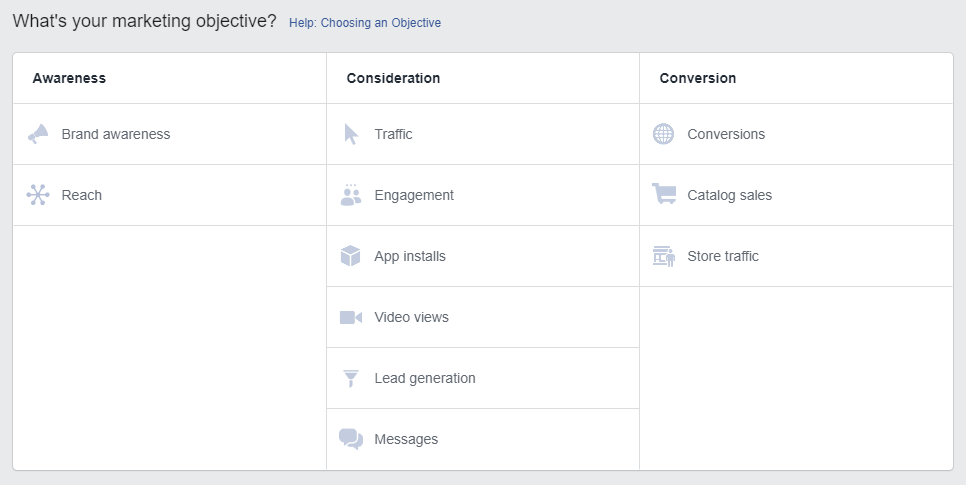
Must Read Articles: